

100+
5-Star Google Reviews

30+
Years Experience

Veteran
Owned

Family
Operated

Owners
On Every Job
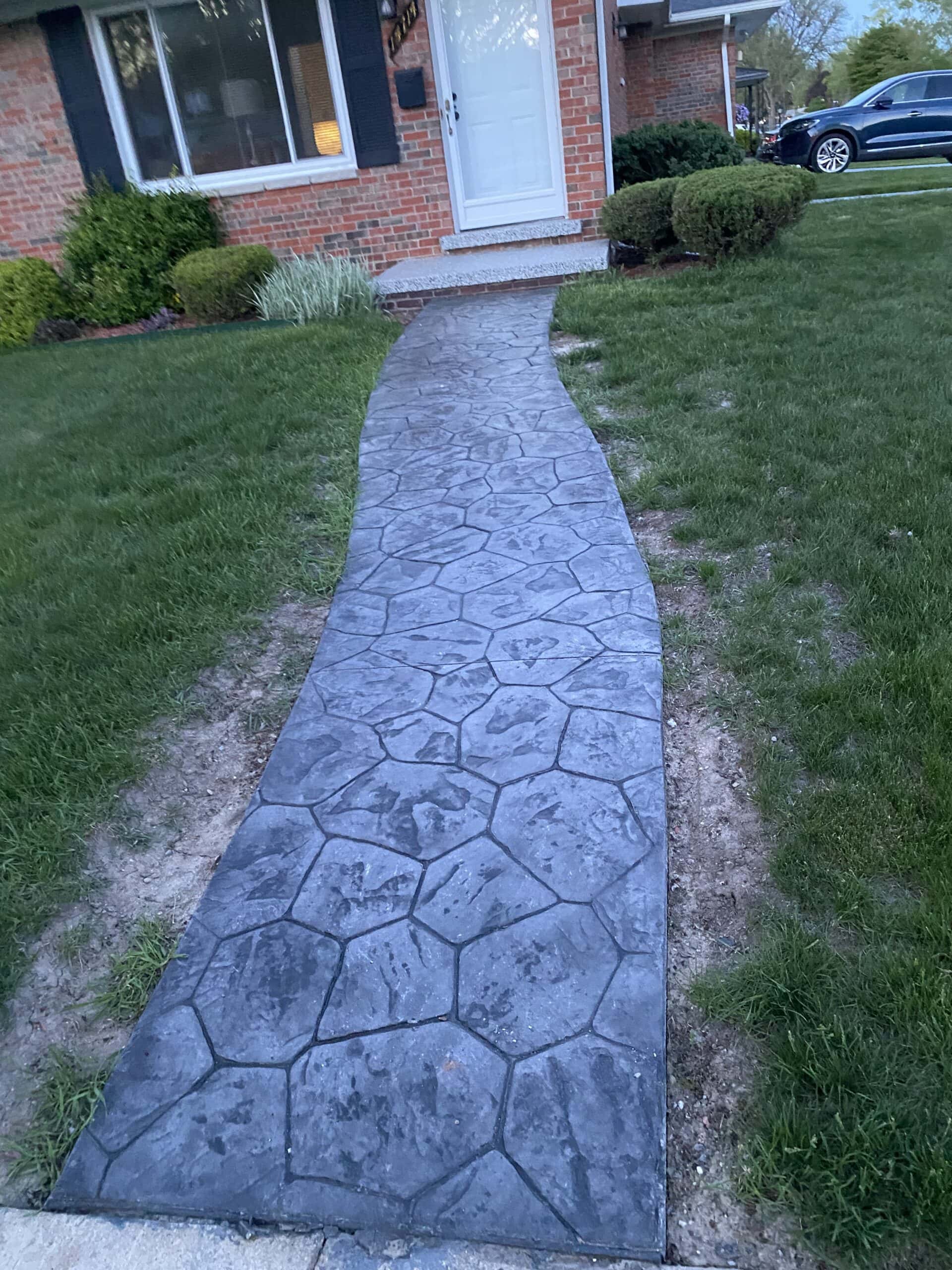
Concrete Step Design Options
Steps do not have to be plain. Within a practical, safe-to-walk surface, you have real choices in width, shape, landing size, step count, and finish. We match the design to your home’s architecture and the conditions of the site rather than forcing a template.
Broom-Finished Concrete Steps
A broom finish is the practical standard for entry steps. The light brushed texture gives traction in wet and icy weather while keeping a clean, understated look that suits almost any home.
Exposed Aggregate Concrete Steps
An exposed aggregate finish reveals the natural stone in the mix for a textured, decorative surface with plenty of character. It reads as upscale and hides everyday wear well on a set of steps.
Lightly Stamped or Decorative Concrete Steps
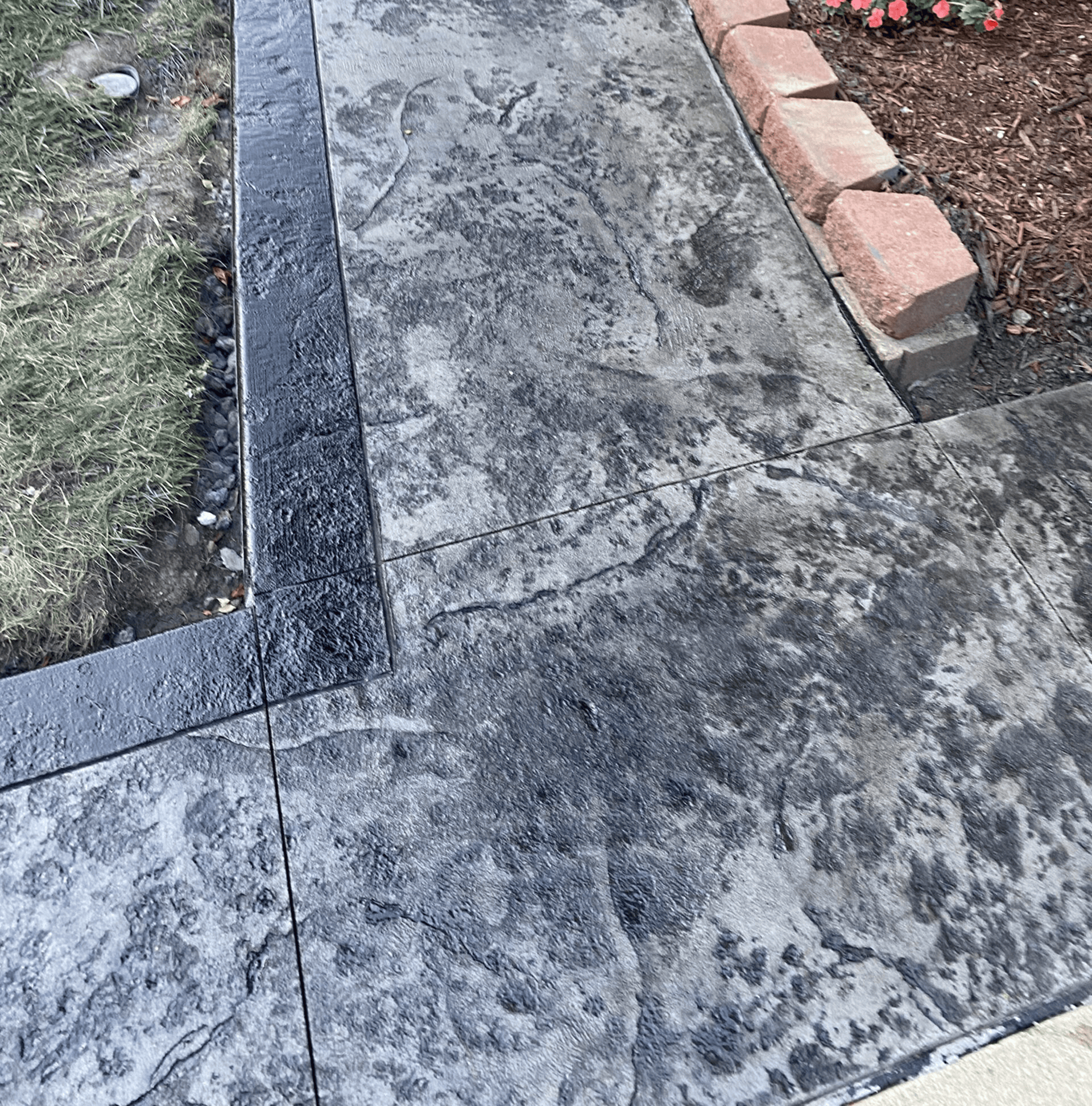
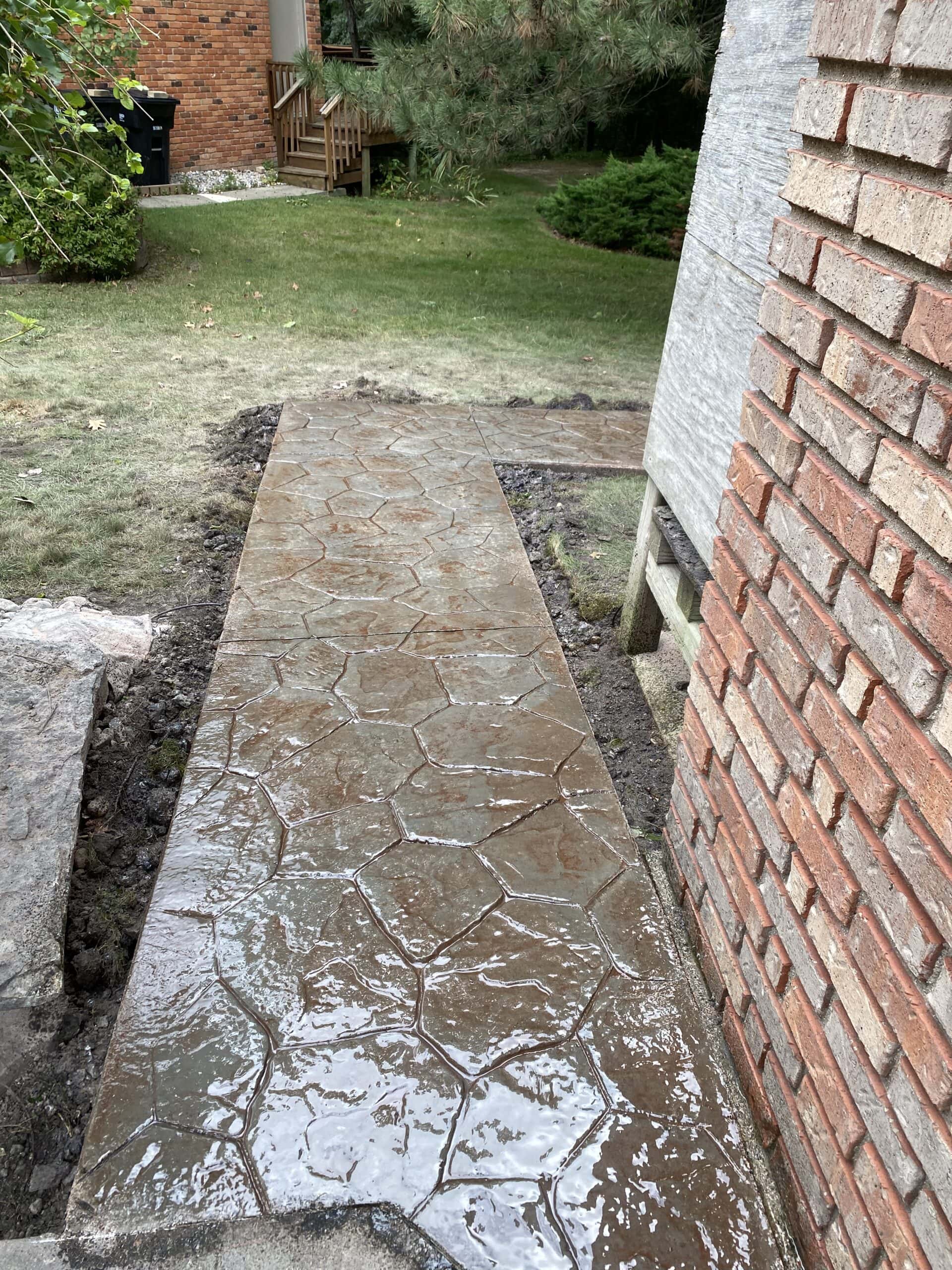
A light stamped concrete pattern can coordinate the steps with a matching patio or walkway while keeping a practical walking surface. We keep the texture sensible for stairs and choose finishes with traction in mind.
Concrete Steps and Stoops for Front Entries, Porches and Walkways
Your steps are the first thing a guest uses when they come to the door, and the last thing they use on the way out. We build steps and stoops that are safe to climb, sized right for the entry, and built to stay put. Whether you are adding a new set or replacing a failing one, we handle it end to end.
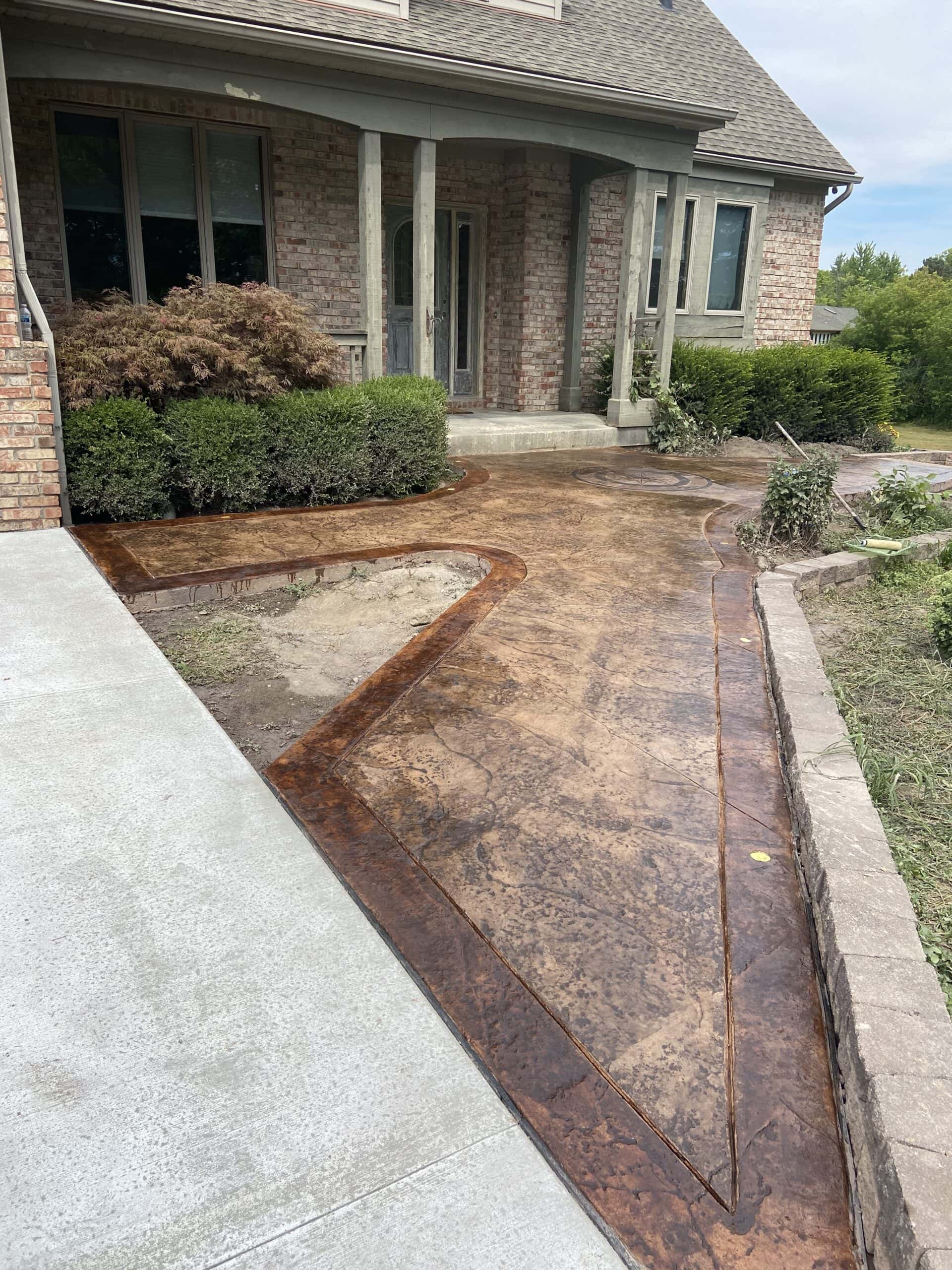
New Concrete Step Installation
For a new build, custom forming lets us match the steps to your entryway, from the width and the number of steps to the rise and run that feel comfortable underfoot, and the landing at the top. We shape the steps around your door height and the grade of the yard so the fit looks built-in, not bolted on.
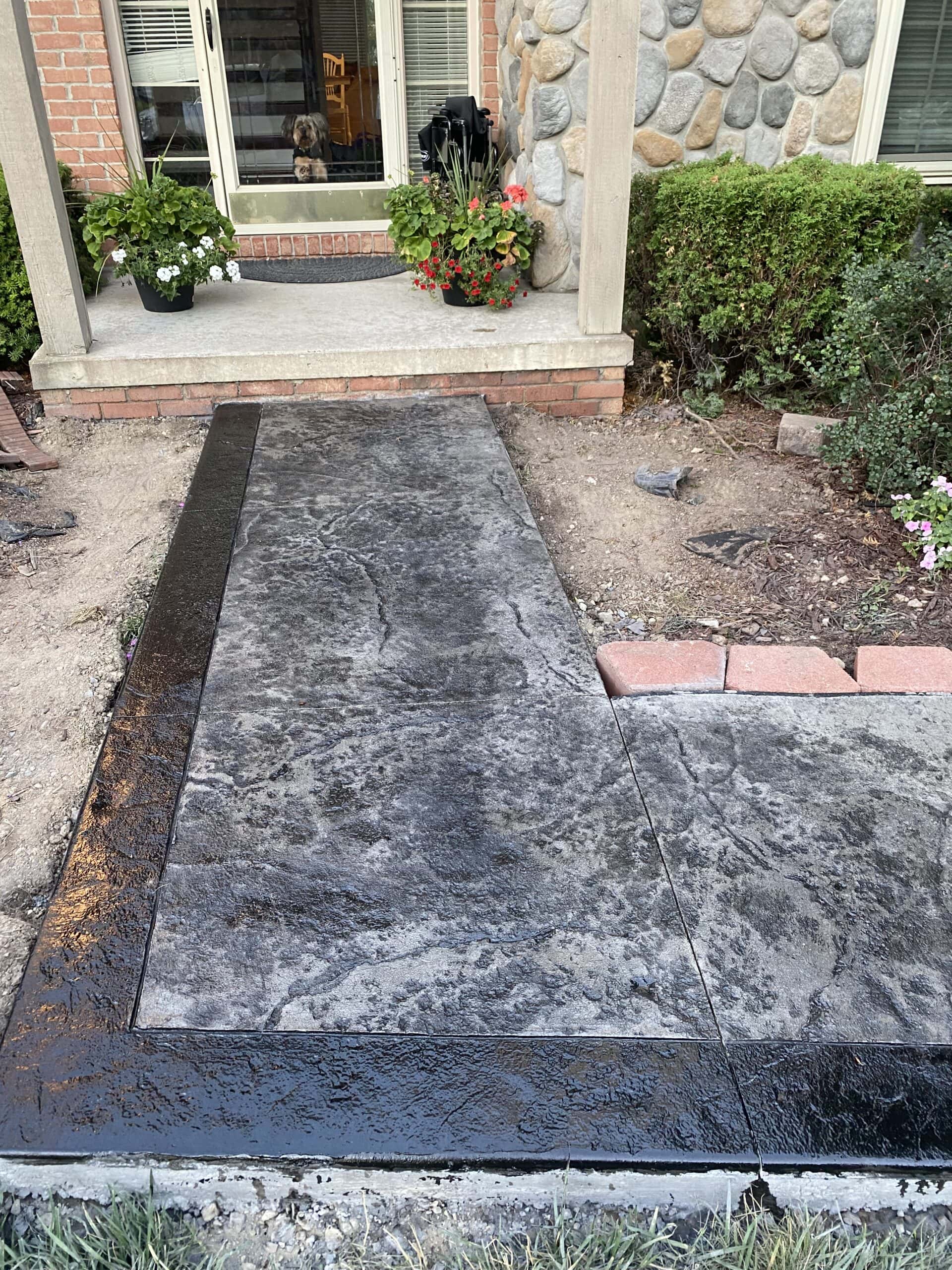
Concrete Step Replacement
When old steps are cracked, crumbling, or pulling away from the house, we replace them the right way. That means removing the failed concrete, preparing and compacting the base, forming the new steps, adding reinforcement, pouring, finishing, curing, and cleaning up. We tie each stage back to the cause of the failure, so the new steps do not repeat the same problem.
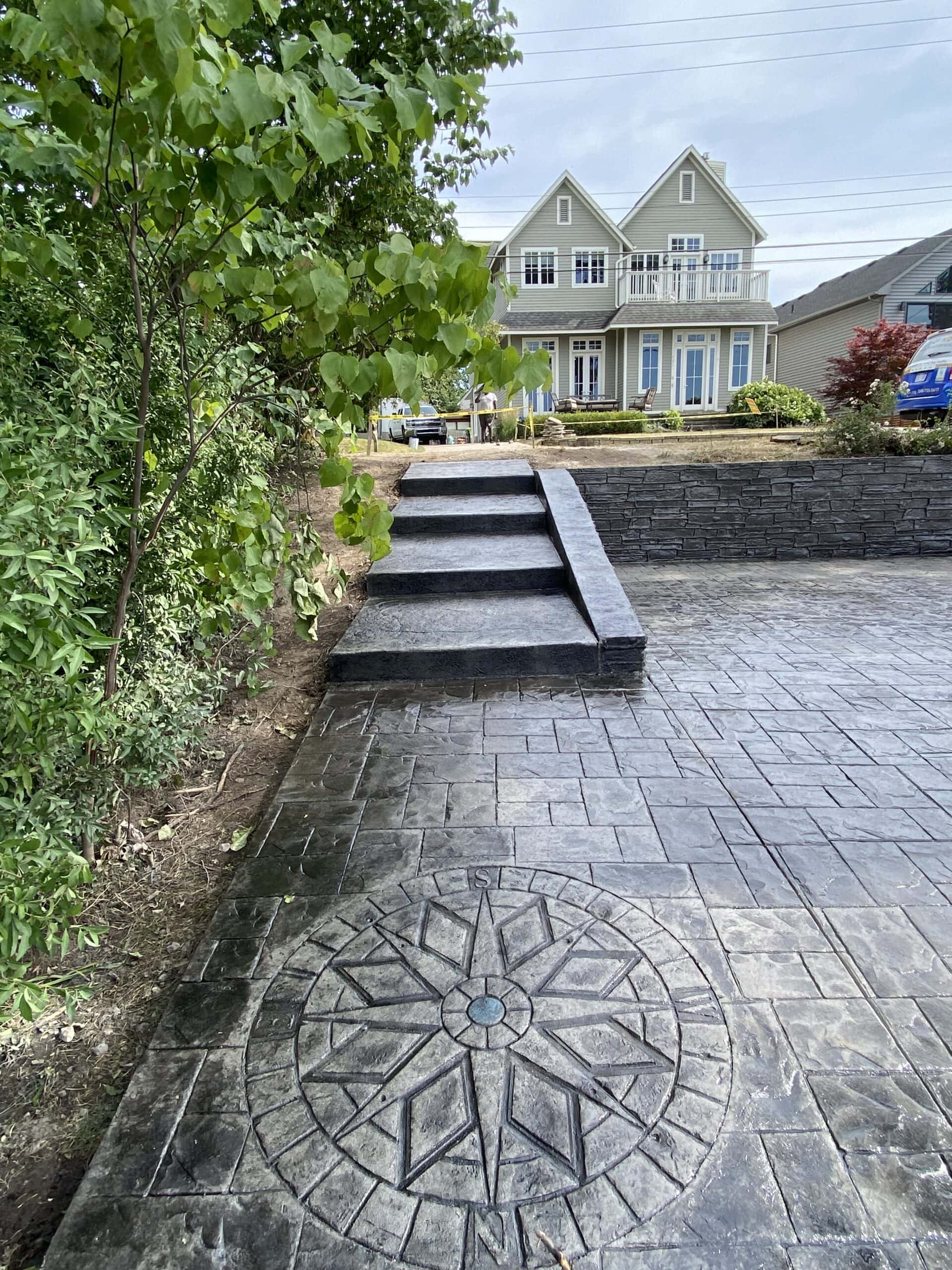
Concrete Stoops and Landing Platforms
A stoop is the landing at your door, and its size, slope, and drainage shape the whole entry. We build stoops and landing platforms that give you room to stand with the storm door open, drain water away from the threshold, and line up cleanly with the steps and any walkway leading to them.
Poured-in-Place vs. Precast Concrete Steps
We build both poured-in-place and precast concrete steps. Neither is automatically better; the right choice depends on your entry, your dimensions, and your timeline. Here is a straight comparison:
| Factor | Poured-in-Place | Precast |
|---|---|---|
| Fit | Highly customizable to the existing entry | Best when standard or available dimensions fit |
| Installation | Requires forming and an on-site pour | Delivered as manufactured units |
| Design flexibility | High | Depends on available or custom units |
| Schedule | Can take longer because of site work and curing | Often faster when units are available |
| Cost | Depends on excavation, forming, size, and finish | Depends on the unit, delivery, and installation |
| Best fit | Custom entries, unusual dimensions, integrated landings | Standard configurations and speed-focused projects |
How We Build Concrete Steps That Handle Michigan Weather
Michigan steps take a beating every winter. Water works into the concrete and the soil beneath, freezes, expands, and pushes everything around. Steps that were not built for that climate are the ones that crack, spall, and shift within a few seasons. We build against it from the base up.
We start with a stable, compacted base and set the grade so water drains away from the steps and the house instead of pooling at the footing. We reinforce the concrete, use an air-entrained mix that gives freezing water room to expand, place control joints where they help, and finish for traction. Where sealing helps protect the surface, we advise on it. With proper installation and care, steps built this way hold up far better through Michigan winters than a quick pour on poor ground.
Our Concrete Step Installation Process
You should know exactly what to expect from the first call to the final walkthrough. Here is how a typical step project runs:

Free estimate and site inspection
We measure the entry, inspect the existing steps, assess grade and drainage, and discuss your goals.

Scope and design
We confirm the step count, width, landing size, finish, removal needs, and connections to adjacent concrete.

Proposal and permit review
We provide the project scope in a free written proposal and handle required permit coordination where it applies.

Demolition and excavation
We remove the failed concrete and prepare the site.

Base, grading, and forms
We build a stable base, set the drainage direction, and form the new steps.

Reinforcement and concrete placement
We install the reinforcement, then place and finish the concrete.

Curing and final care
We explain curing time, when to use the steps again, and any sealing or care guidance.

Final walkthrough
We review the finished entry, clean up, and go over next steps with you.
How Much Do Concrete Steps Cost in Michigan?
There is no honest one-size number, so we price each project on its own. Cost is shaped by the number and width of the steps, the landing size, demolition and disposal of old concrete, excavation and access, the condition of the base, drainage work, reinforcement, the finish you choose, handrail coordination, and any walkway tie-in.
That is why an on-site quote beats a web calculator every time; the calculator cannot see your grade, your access, or the shape your old steps are in. Guevara Construction focuses on larger qualifying Projects starting at $6,500. and step work is often combined with a walkway, patio, or other concrete work. You get a free written proposal with the scope set up front, and any scope changes are quoted before that work begins. Financing is available through Synchrony Financial, including 0% interest for 18 months, subject to approval.
Why Choose Guevara Construction for Concrete Steps?
Steps carry every person who comes to your door, so the build has to be right. Here is what our crew brings:
- 30+ years of Michigan concrete experience. Of steps, stoops, and flatwork across Metro Detroit.
- Veteran-owned and family-operated. Ownership is on-site, working alongside the crew rather than managing from an office.
- Drainage assessment on every job. We check grade and drainage before we build, so water moves away from your entry.
- Licensed, insured, and BBB A+ rated. Full accountability on every project, backed by 100+ 5-Star Google Reviews.
- Full permit management. We file the township permits directly as part of the job.
- One crew for related concrete work. When it is genuinely useful, we can tie your steps into a new walkway, patio, or other concrete work with matching finishes.
Get a Free Estimate for Concrete Steps or a Stoop
Send us a few details about your entry, including how many steps you have now, what is going wrong, and whether you want to change the look. We schedule a site visit to measure and review the existing conditions, then walk you through your options. The written proposal is no-obligation.
Frequently Asked Questions
How much do concrete steps cost in Michigan?
It depends on the project. The number and width of steps, landing size, demolition, excavation, base condition, drainage, reinforcement, and finish all affect the price. We focus on qualifying Projects starting at $6,500. and give you a free written proposal after an on-site measurement.
How long does concrete step replacement take?
Most step replacements are a short project on site, followed by curing time before full use. The exact schedule depends on scope, permitting, weather, site conditions, and concrete scheduling. We give you the expected timeline after reviewing the project.
How long before I can walk on new concrete steps?
You can usually use new steps within a couple of days, though full cure takes longer, and we give you specific guidance for your pour. Weather and the concrete mix affect the timing, so we set expectations before we finish.
Should I repair or replace my concrete steps?
When steps are widely cracked, spalling, or have shifted away from the house, replacement is the lasting answer. We specialize in full replacements rather than piecemeal fixes, because rebuilding the base and drainage is what stops the problem from coming back. We will look at your steps and give you an honest read.
What causes concrete steps to crack or settle in Michigan?
Most step failures start below the surface: a weak or poorly compacted base, water pooling from bad drainage, missing reinforcement, and freeze-thaw movement over the winter. Correcting the base and drainage during the build is how we prevent it.
Do you build poured-in-place and precast concrete steps?
Yes, we build both. Poured-in-place steps are formed and cast on site for a custom fit, while precast steps are manufactured units that can be faster when standard dimensions work. We help you choose based on your entry, dimensions, and timeline.
What finishes are available for concrete steps?
Common choices are a broom finish for traction, exposed aggregate for a textured decorative look, and light stamped or decorative concrete to coordinate with a patio or walkway. We keep the surface practical and safe to walk on in every finish.
Do you handle permits for concrete step projects?
Yes. Where a permit is required, we file it directly with your township or municipality as part of our process, so you do not have to deal with the paperwork.
Can new steps connect to an existing concrete walkway?
Yes. We tie new steps and stoops into an existing walkway or driveway, matching the grade and finish so the transition is clean and drains properly. If the adjacent concrete is failing, we will point that out.
What areas does Guevara Construction serve?
We work from our Novi headquarters across Southeast Michigan and Metro Detroit, covering Oakland and Wayne counties and parts of Washtenaw County, including Novi, Northville, Livonia, Farmington, Farmington Hills, Plymouth and Bloomfield Hills.