

100+
5-Star Google Reviews

30+
Years Experience

Veteran
Owned

Family
Operated

Owners
On Every Job
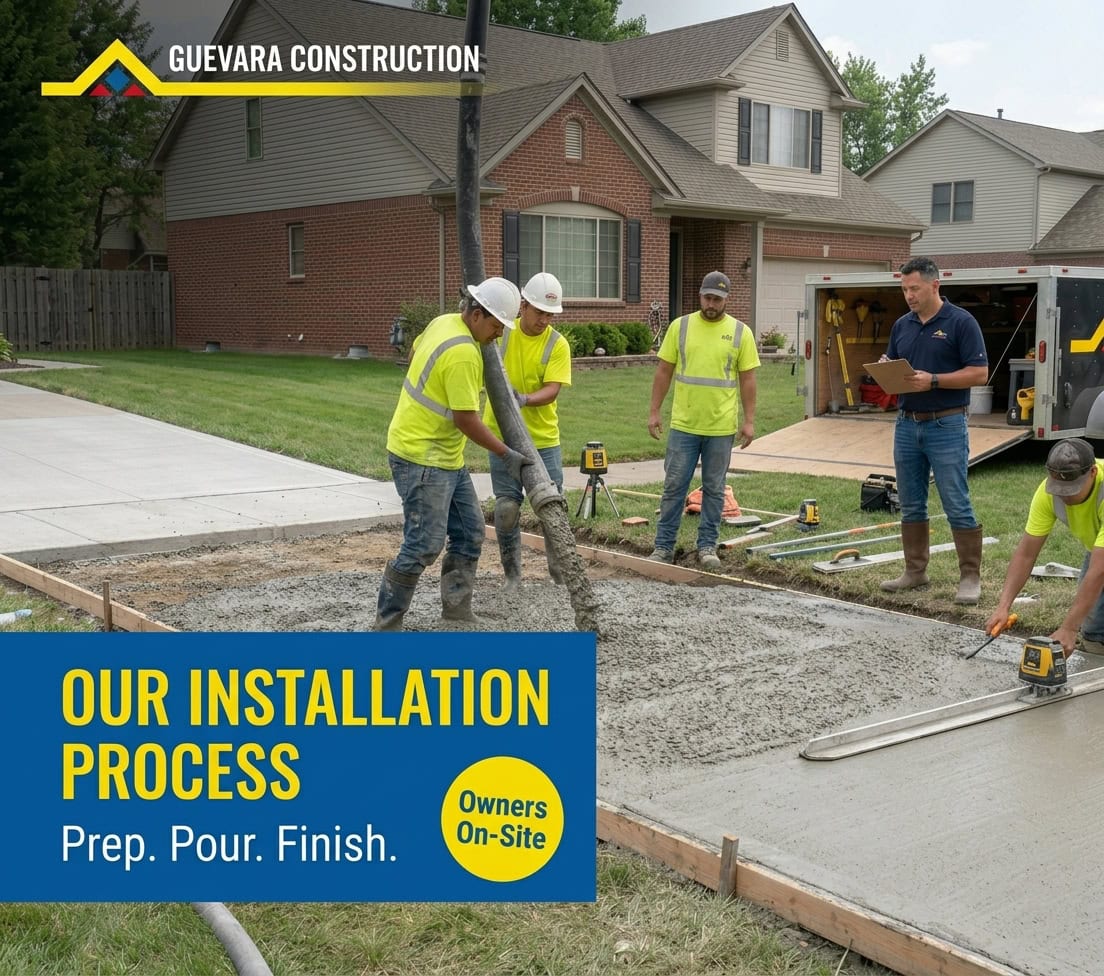
A concrete pool deck is the surface that surrounds your in-ground pool. It handles a lot. People walk on it all day, it gets wet, and Michigan winters are tough on it every year. When it is built right, it lasts for decades. It needs the right slope, a slip-resistant finish, and sealed joints to stay safe. When it is not built right, problems show up fast. You get cracks, standing water, and trip hazards.
Guevara Construction builds and replaces concrete pool decks across Southeast Michigan. We handle new installation and full replacement, from first pour to final walkthrough. Family-owned, veteran-operated, and based in Novi with 30+ years serving Livonia, Farmington Hills, Canton, and the surrounding Metro Detroit area.
State of Michigan licensed and fully insured. Owners on-site on every job.
Call: 313-629-1100 | Get Your Free Estimate
Key Takeaways
- Guevara Construction installs and replaces concrete pool decks across Metro Detroit and Southeast Michigan.
- All pool decks are planned for proper drainage slope and slip-resistant finish, two factors that directly affect safety and longevity.
- Michigan’s freeze-thaw climate requires specific curing, sealing, and first-winter care to protect a new slab.
- Owners are present on every job. No subcontracting, no handoffs.
- Free, no-obligation estimates. State of Michigan licensed, fully insured, veteran-owned.
Concrete Pool Deck Services
We work with homeowners adding a new pool deck and those replacing one that has deteriorated. Every job starts with an on-site evaluation of the existing base, drainage, and pool area.
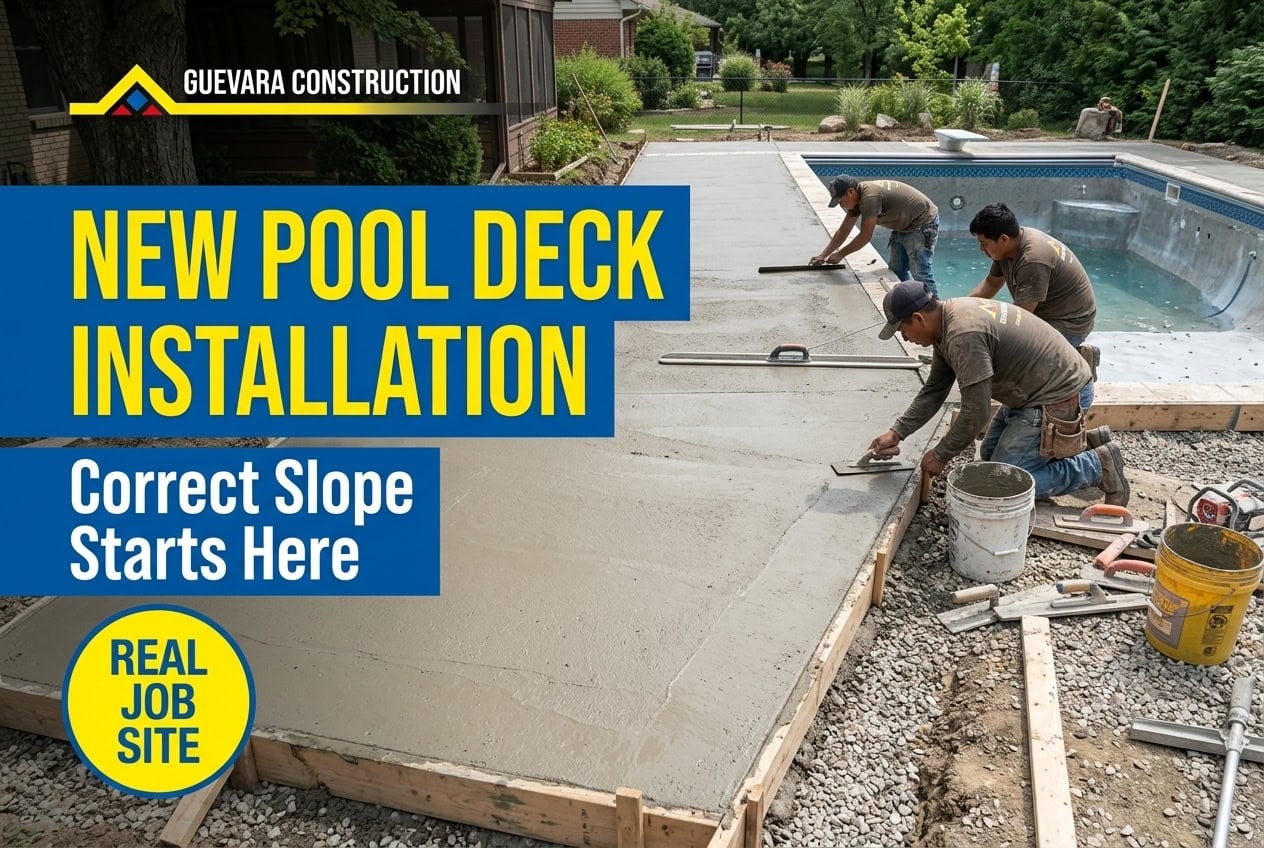
New Concrete Pool Deck Installation
A new pool deck needs more planning than most concrete projects. The slab must slope away from the pool to direct splash water and rain toward drains or landscaping, not into the pool structure or your foundation. We plan joint locations before pouring to control where the concrete can expand and move with temperature changes.
Slip-resistant finishing is part of every new installation. We discuss finish options with you during the estimate so the surface looks right and holds traction when wet.
If your pool is being newly installed by another contractor, we coordinate timelines so the deck goes in cleanly after the pool work is complete.
Replace Pool Deck and Tear-Out
When an existing deck is too far gone for repair, full replacement is the right call. We remove the old slab, haul off the debris, and evaluate the base before placing anything new. If the sub-base shifted or eroded, we correct it. The pool area is kept protected during demo and prep work.
Replacement also gives you the chance to reconfigure your layout, change your finish, or adjust drainage that was never right the first time.
When a Pool Deck Needs Full Replacement
Sinking slabs, uneven sections, and water that pools on the deck instead of draining away are not just cosmetic problems. They signal a base or drainage design failure that only gets worse over time.
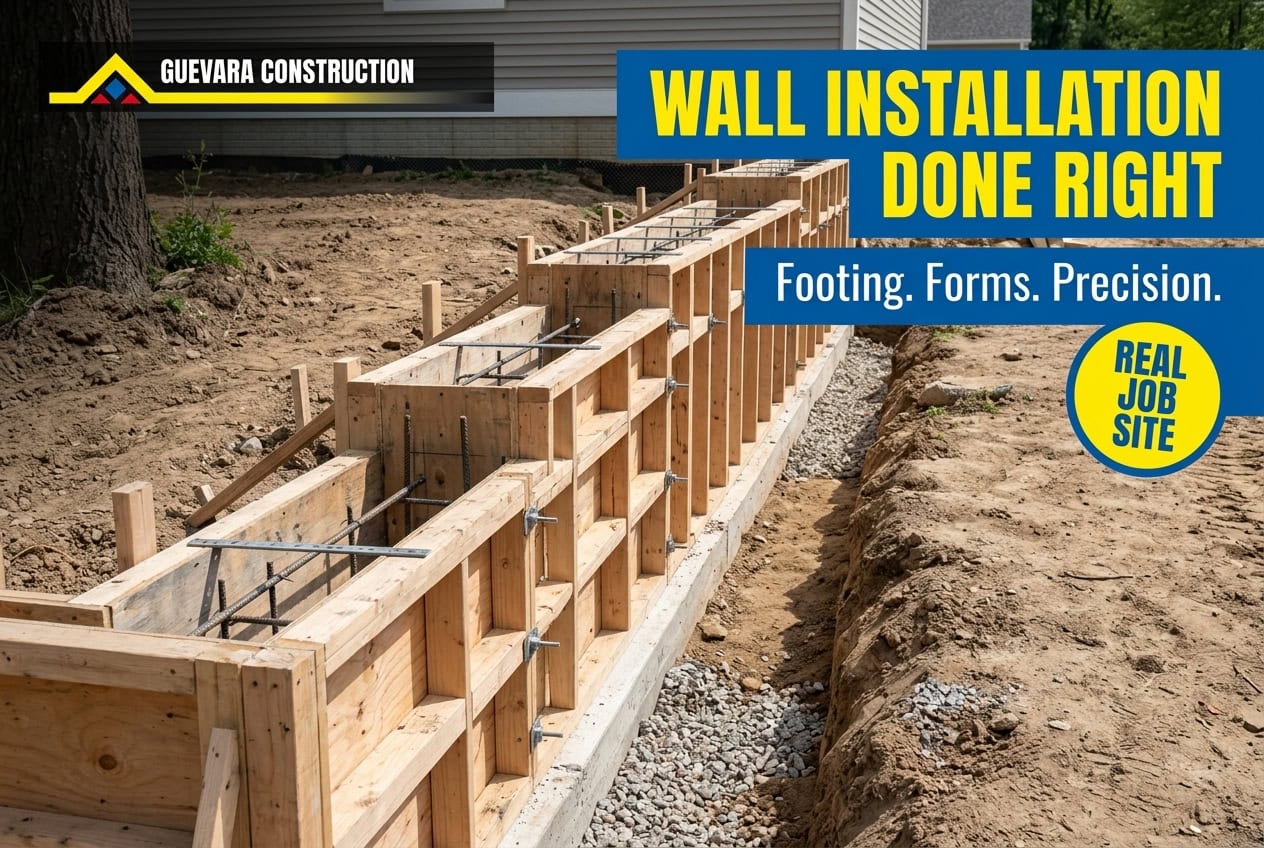
When we see these issues, we evaluate the base and recommend full replacement so the new deck is graded and built correctly from the ground up. Drainage improvements are handled as part of that replacement scope, including retaining walls and drainage structures when your site calls for them.
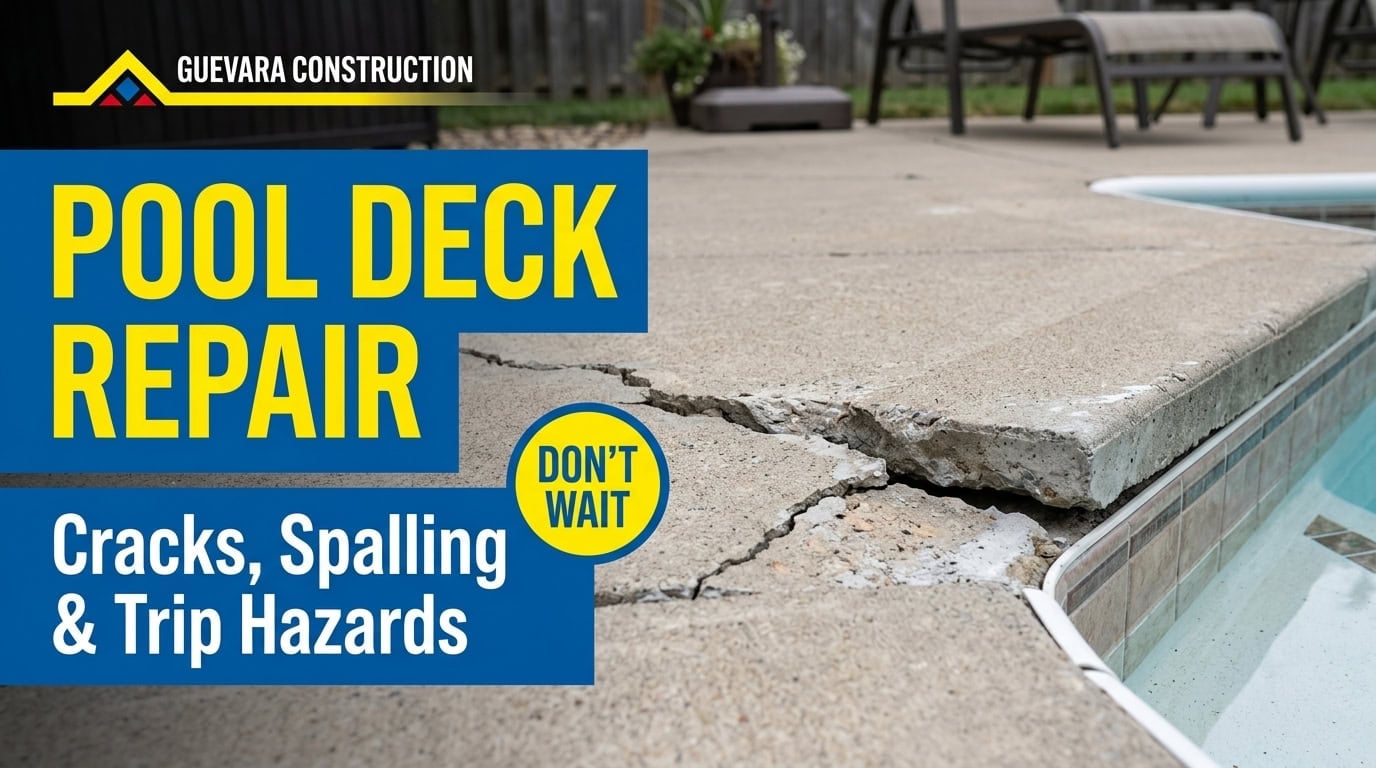
Signs Your Pool Deck Needs Replacing
Cracks that are widening, edges that have shifted, flaking surfaces, and water pooling near the pool edge all signal a deck that needs attention before someone trips or the damage spreads further.
We assess each slab section and, when the damage points to a failed base or structural issue, recommend a full replacement built with proper slope, joint planning, and sealing from the start.
Finish Options for Safe Poolside Grip
The finish on a pool deck is not just about looks. It directly affects how much traction the surface provides when wet, how hot it gets in direct sun, and how easy it is to maintain. We discuss these trade-offs with you so the finish you choose matches how you actually use the space.
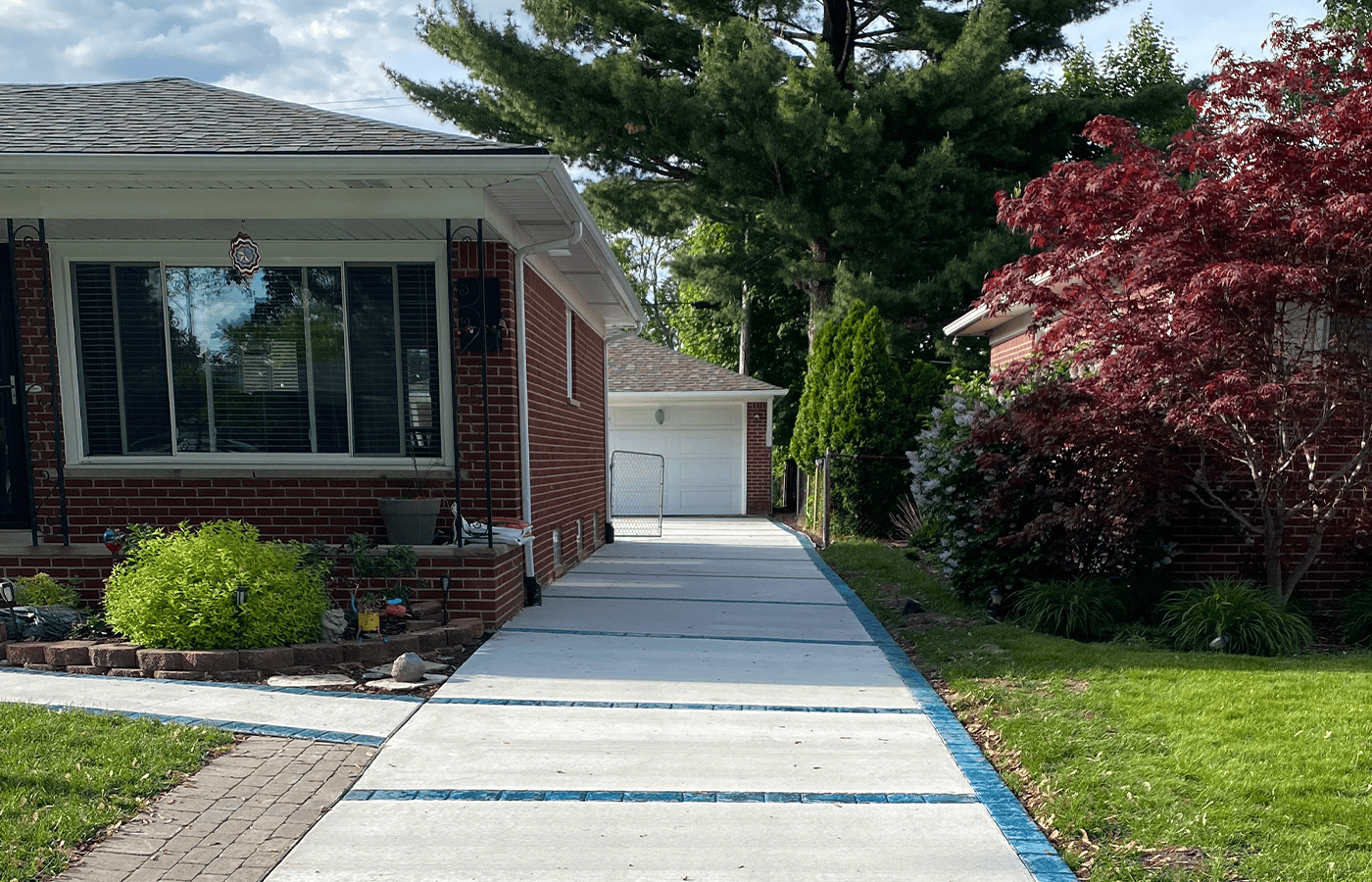
Broom Finish and Light Texture
Broom finish is the most common pool deck surface. A stiff-bristle broom pulled across the wet concrete creates a fine, consistent texture that provides a solid grip without being rough on bare feet. It is low maintenance, holds up well through Michigan winters, and reads clean with most pool coping styles.
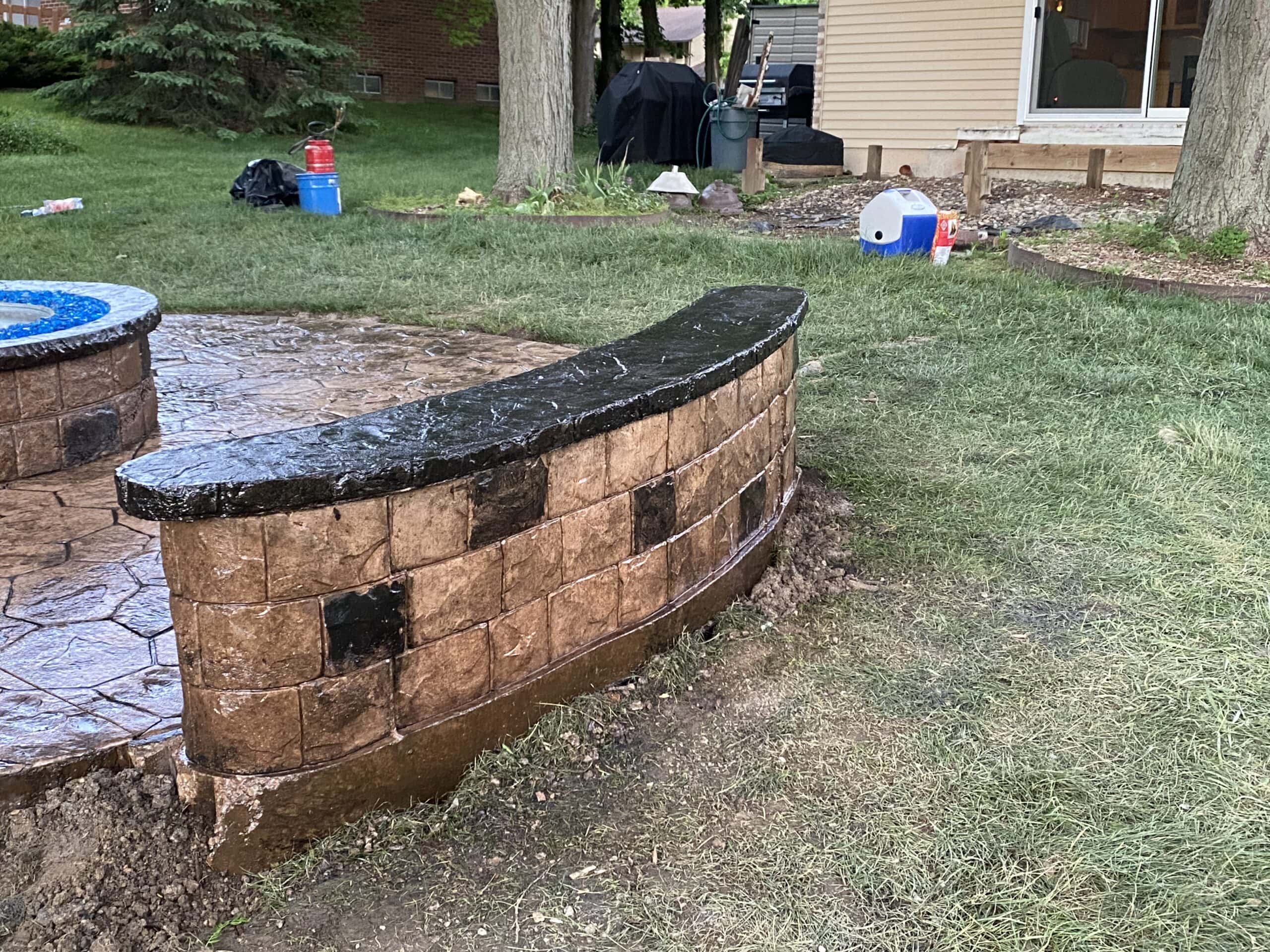
Exposed Aggregate and Salt Finish
Exposed aggregate surfaces reveal the natural stone within the concrete mix, giving the deck more texture and visual depth. Salt finish uses rock salt pressed into the wet surface, then washed out, to produce small pits that increase traction.
Both options provide good grip and a more decorative look than the broom finish. They are part of our broader stamped and exposed aggregate concrete work and carry slightly more texture underfoot, which suits homeowners who prioritize traction over smooth comfort.
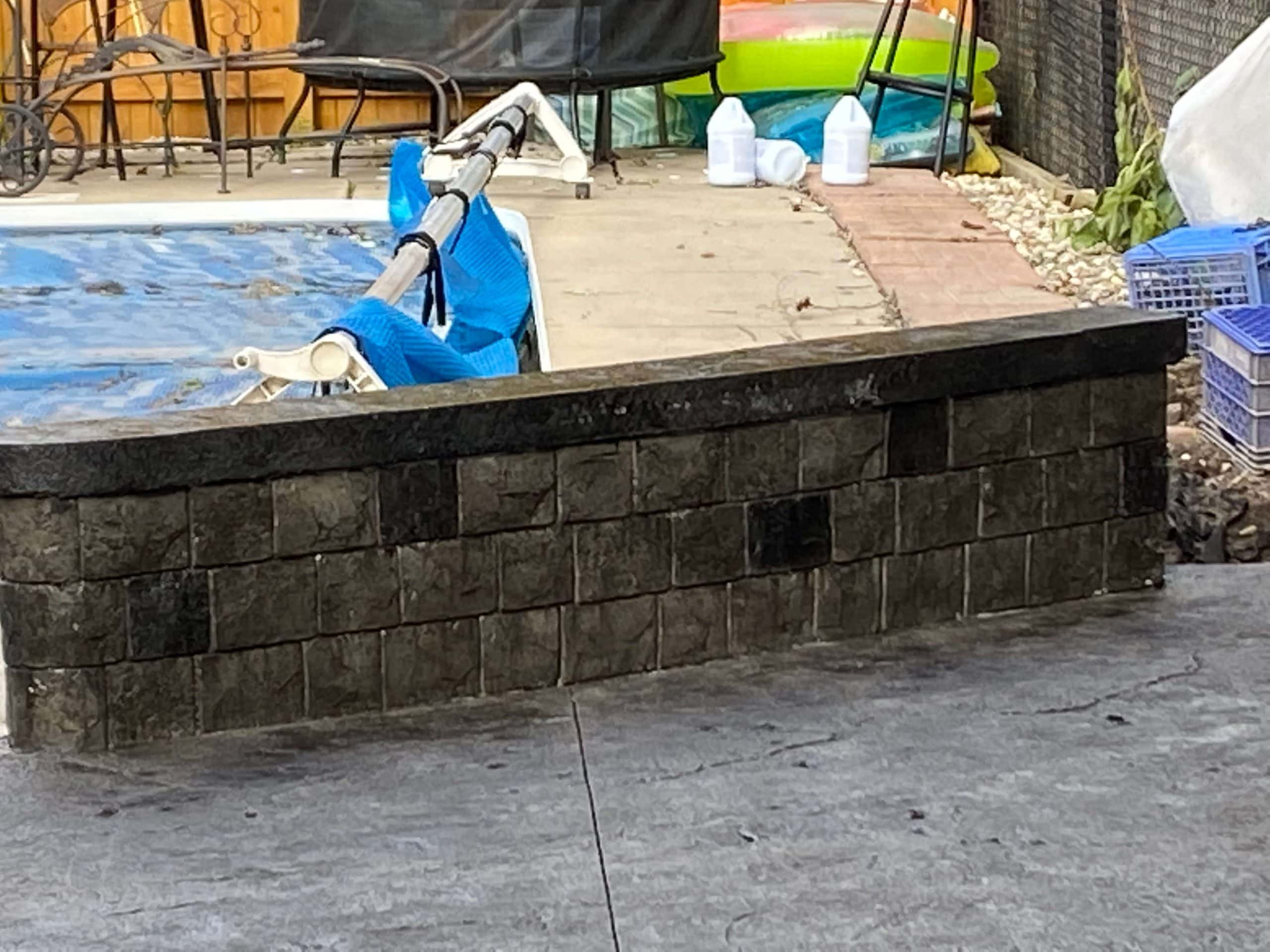
Decorative Options and Border Details
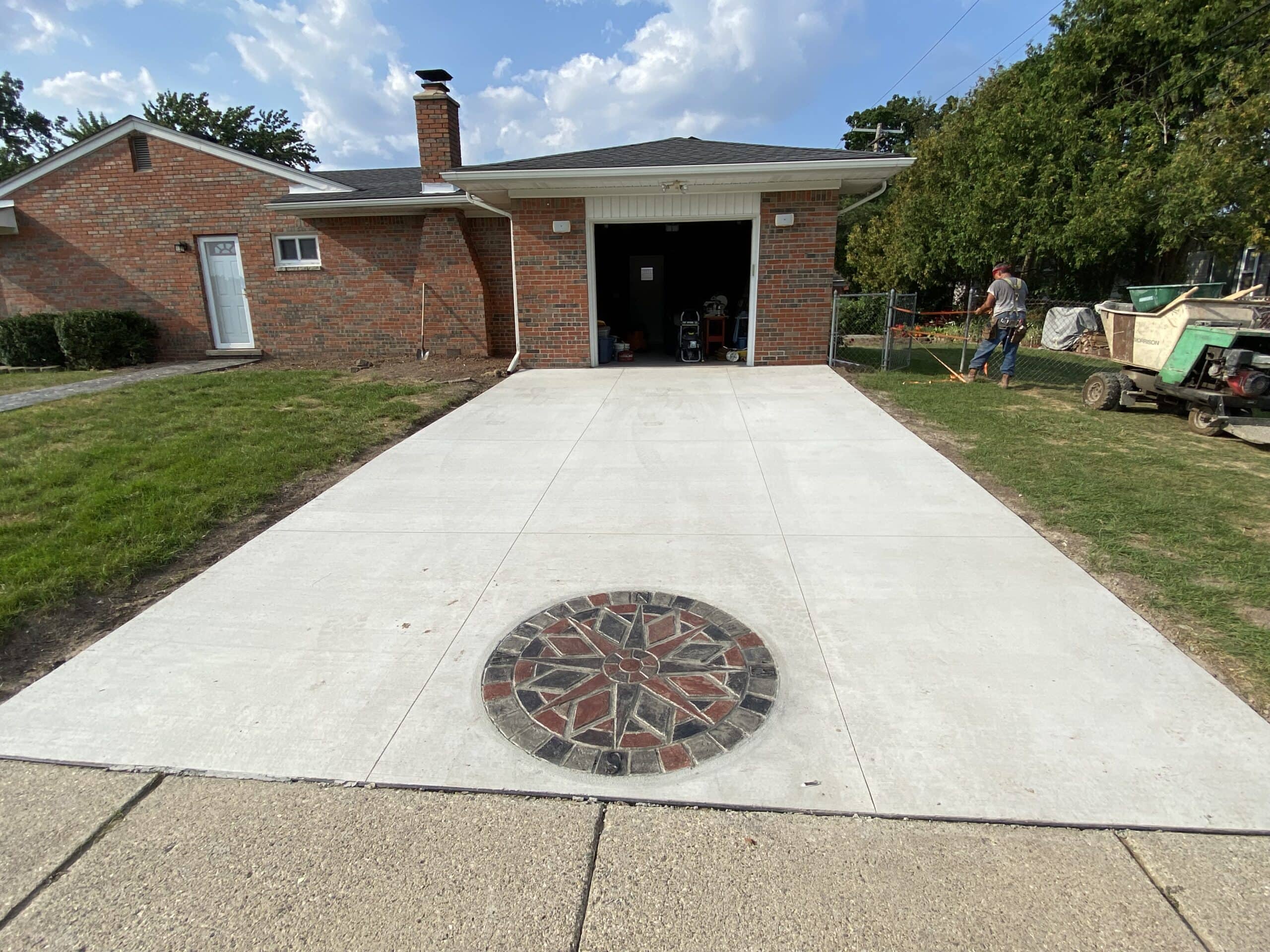
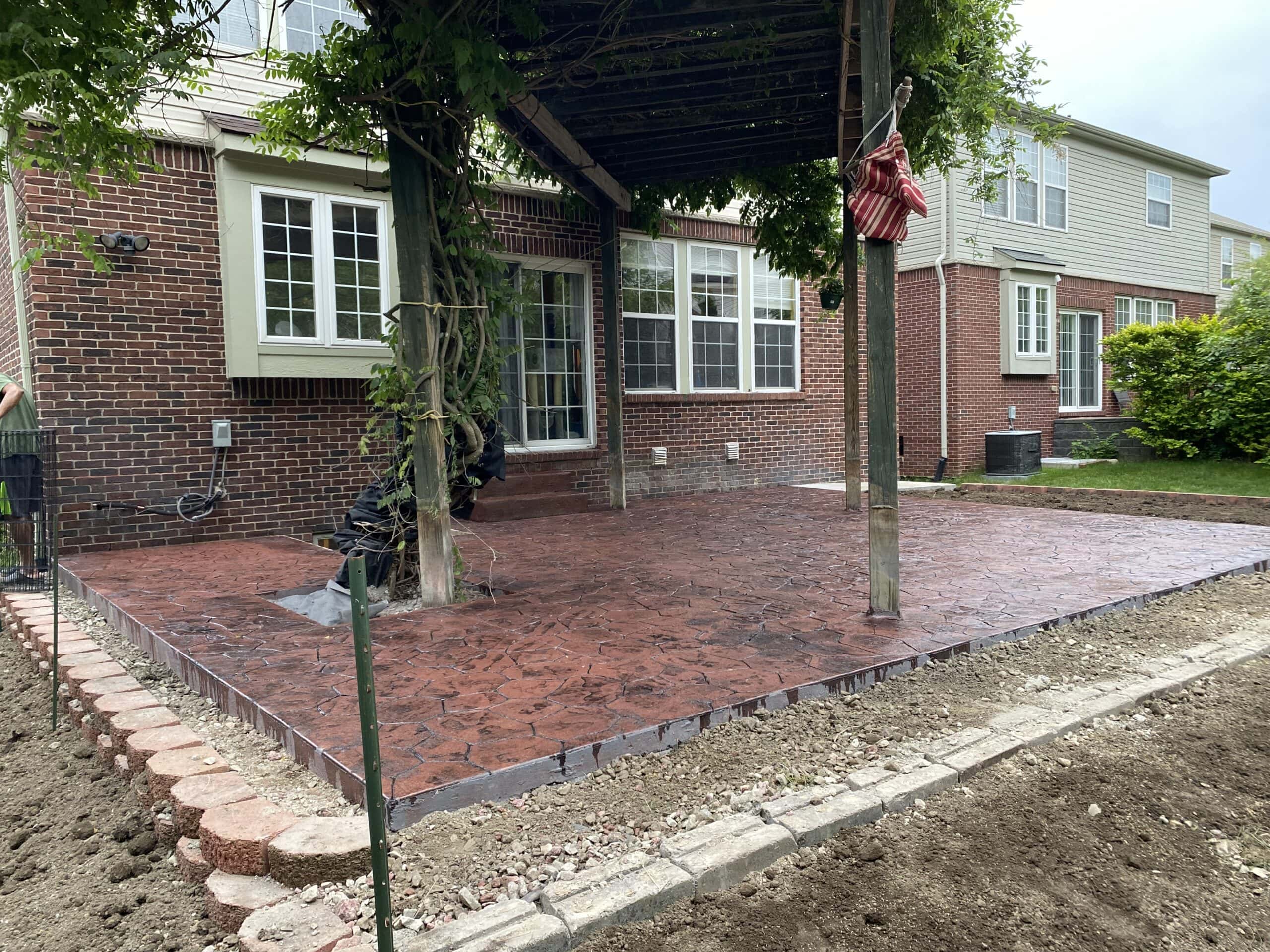
A colored border, stamped pattern on a connecting walkway, or scored geometric design at the perimeter can add a finished, custom feel to the deck without stamping the full surface area.
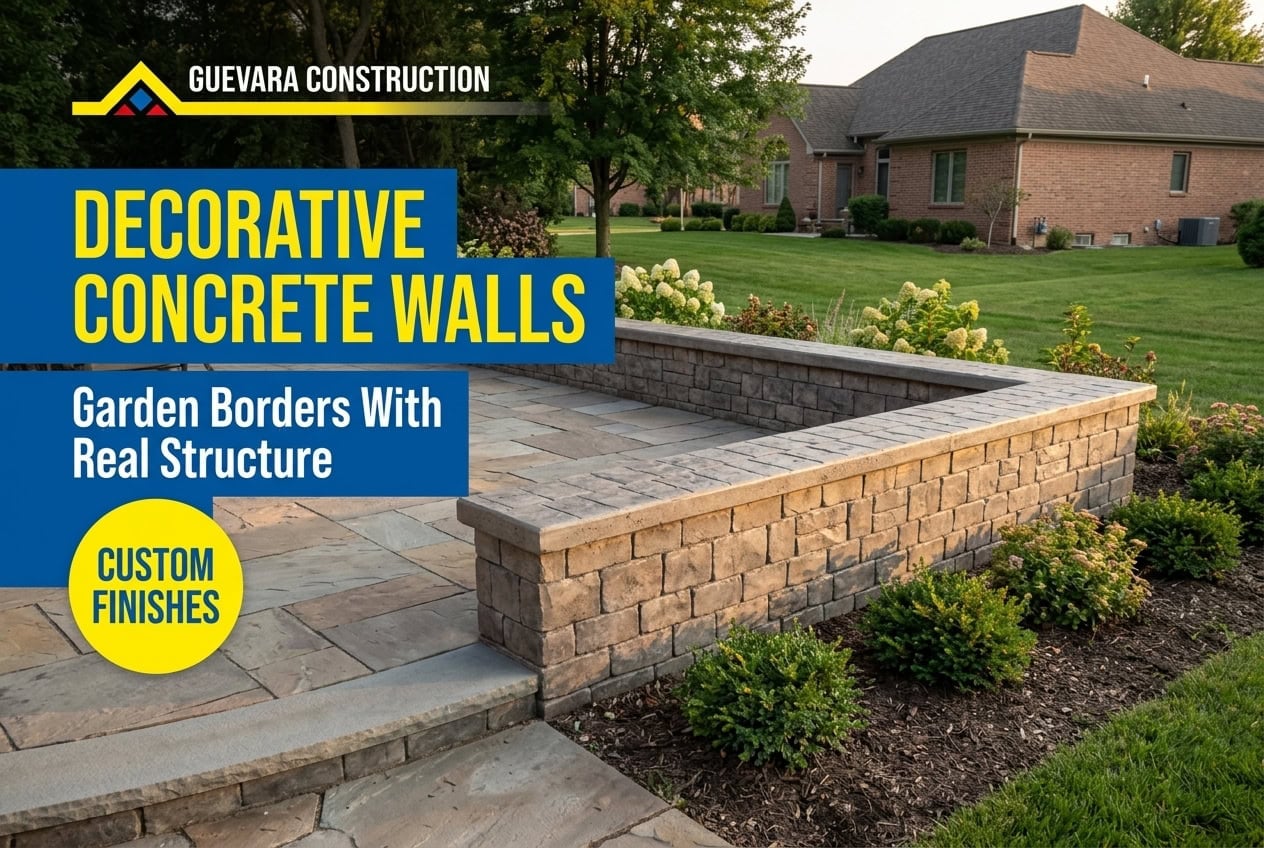
These additions work well alongside a main field of broom or salt finish. We also build custom patios that connect to pool deck areas, so the two surfaces can be designed together for a consistent look.
Sealer Finish and Color Direction
Sealer does not change the surface texture, but it protects the slab from moisture penetration, chlorine splash, and staining. It also brings out the natural tone of the concrete or aggregate.
We seal pool decks after sufficient cure time and recommend a sealing schedule for the years ahead. In Michigan, sealing before the first winter is part of protecting the slab from freeze-thaw damage.
A Clear Process From Estimate to Final Walkthrough
Pool deck projects fail most often because of contractor handoffs, poor communication, or shortcuts during prep. Our process is straightforward, with owners on-site at every stage.
On-Site Evaluation and Design Selection
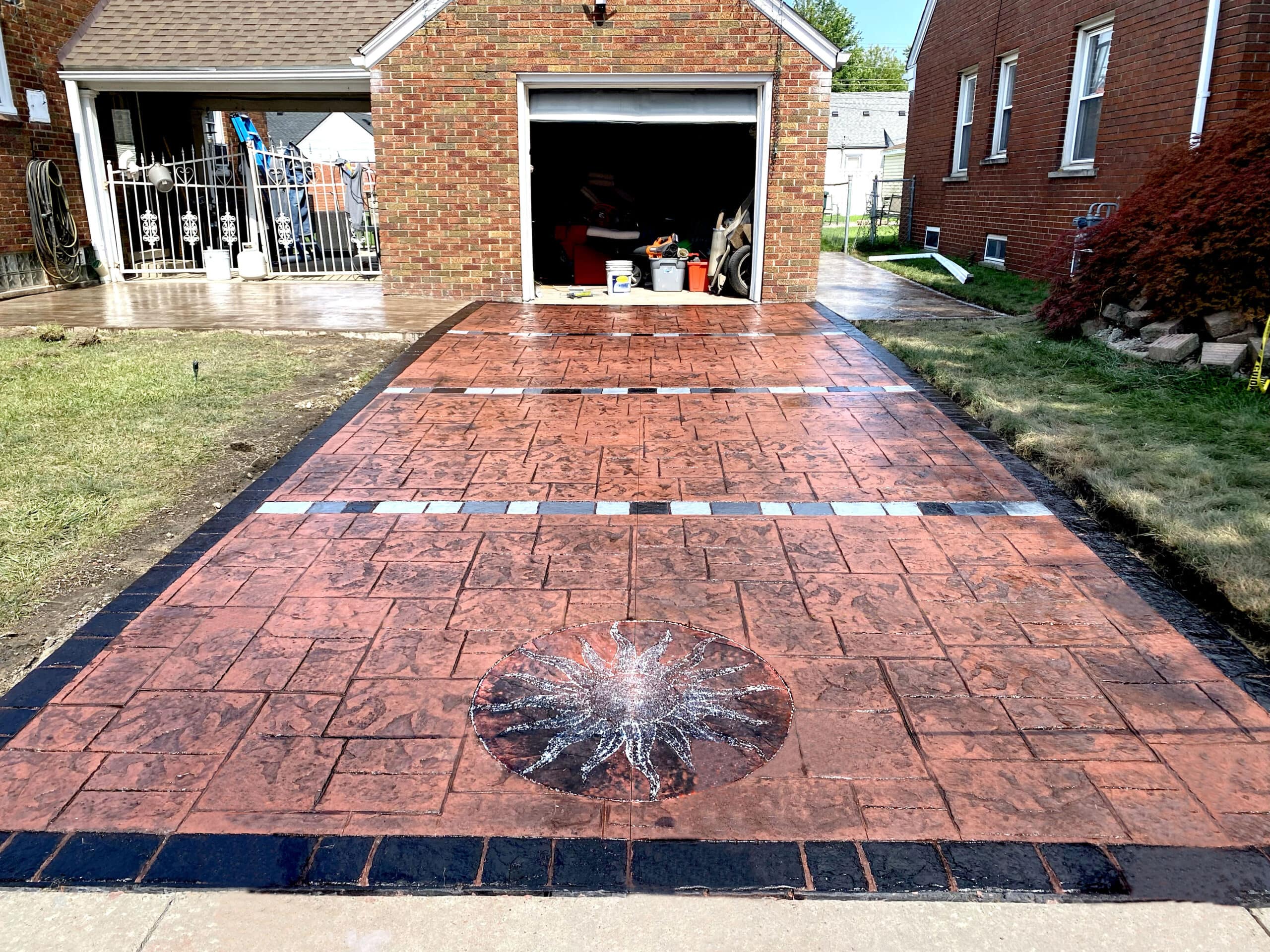
We visit the site, measure the pool perimeter and surrounding area, assess the existing base or old slab condition, and identify drainage needs. We discuss finish options, layout, and any special conditions like poolside steps or equipment pads. You receive a clear written proposal before we start.
Site Prep, Base, and Forming
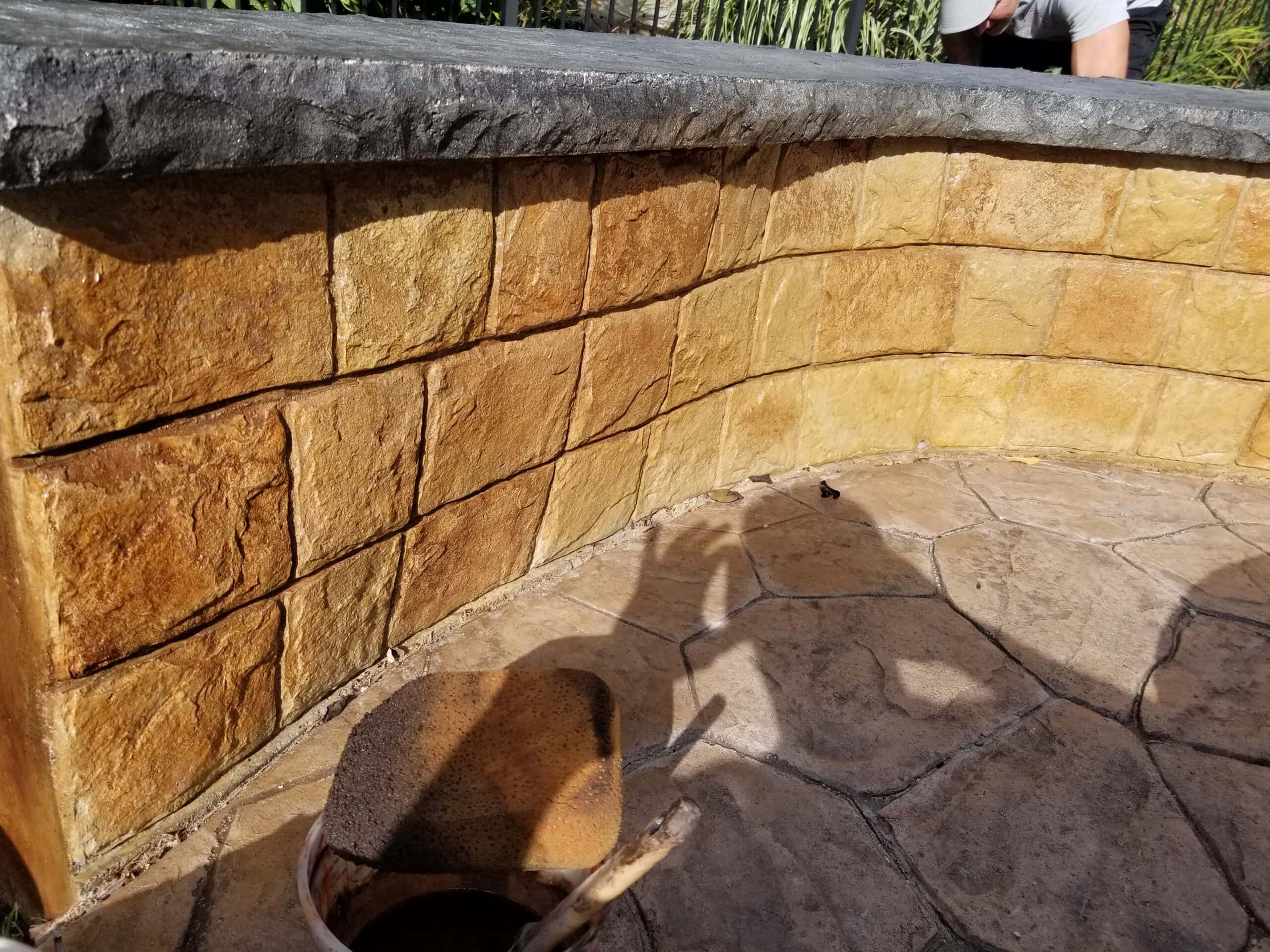
Prep is where most pool deck problems start. We excavate to the correct depth, set forms to control slope and shape, and verify the sub-base is stable and properly compacted. Any drainage corrections are made at this stage, not after the slab is poured.
Placement, Finishing, and Joint Planning
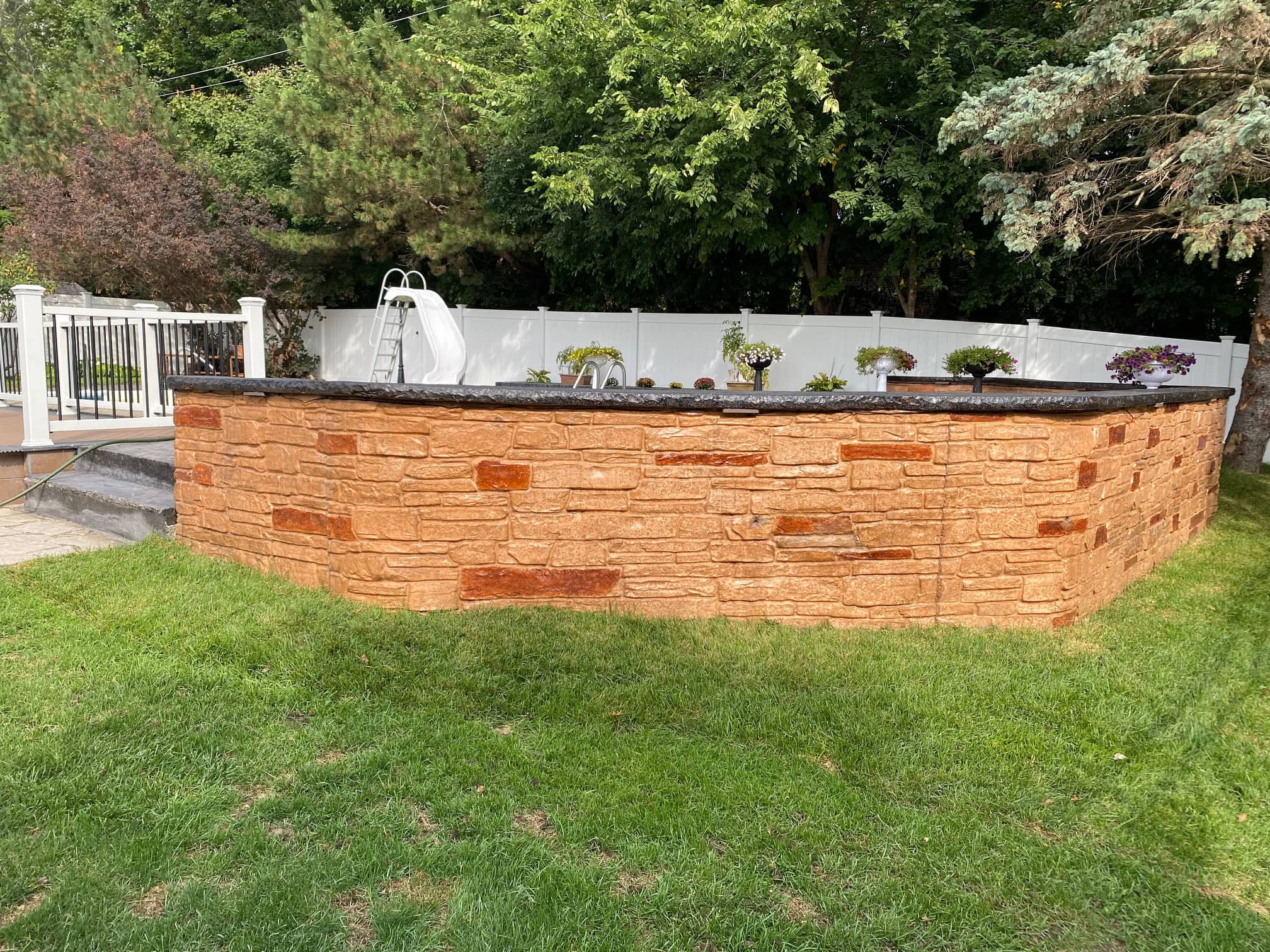
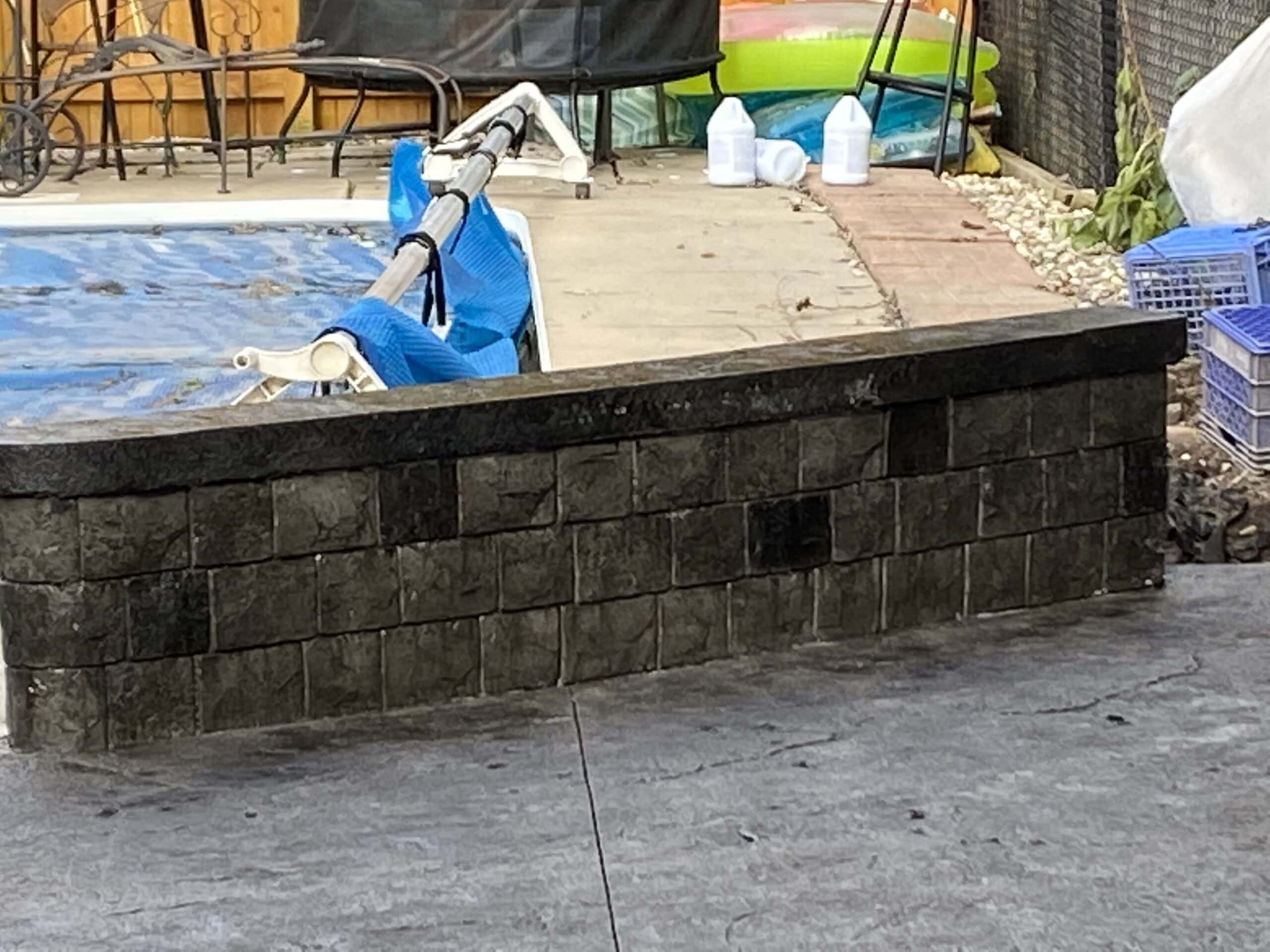
Concrete goes in at the planned mix and thickness. We finish the surface to the agreed texture, then cut or tool control joints at planned intervals so the slab can move with temperature changes without random cracking. Pool coping and edge details are handled cleanly to create a tight transition.
Cure, Seal, and Final Walkthrough
After placement, the slab needs time to cure before sealing. We apply sealer at the right window and schedule a final walkthrough with you to confirm drainage, finish quality, and edge details before we leave the site. You will not hear from a different crew lead at the end of the job.
Built for Michigan Conditions
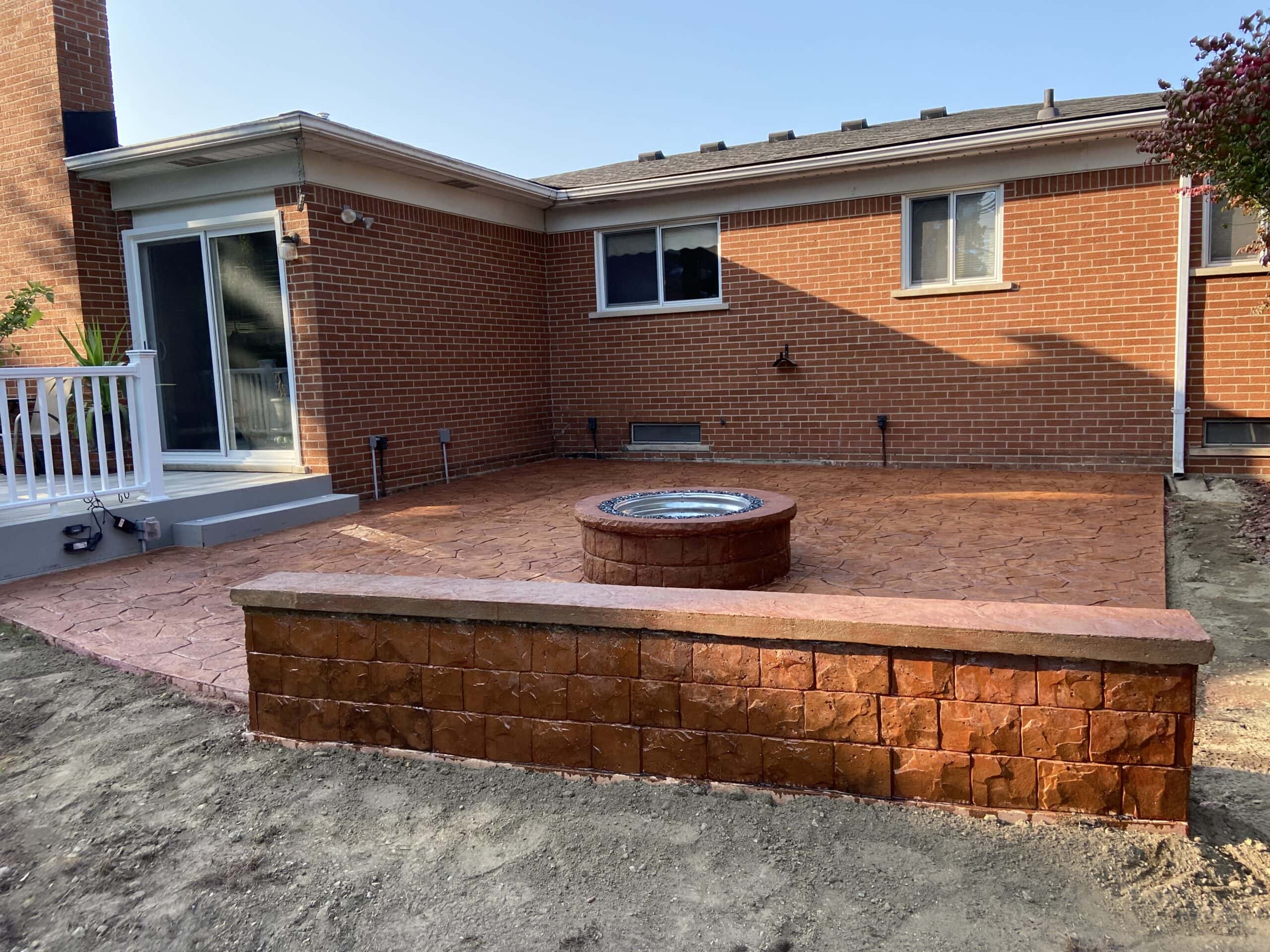
Michigan’s freeze-thaw cycle is one of the most damaging environments for concrete. A slab that is poured, finished, and sealed correctly can handle decades of it. One that is rushed or skips the sealing step deteriorates fast.
Freeze-Thaw and First-Winter Care
New concrete needs an adequate cure time before it is exposed to freezing temperatures and de-icing products. For pool decks placed in late summer or fall, this means following the cure schedule carefully and avoiding chemical de-icers during the first winter season.
Sand provides traction without chemical damage during that first winter. We discuss timing and first-winter care with every client at the final walkthrough, so you know what to do and what to avoid.
Sealing Plan and Deicer Guidance
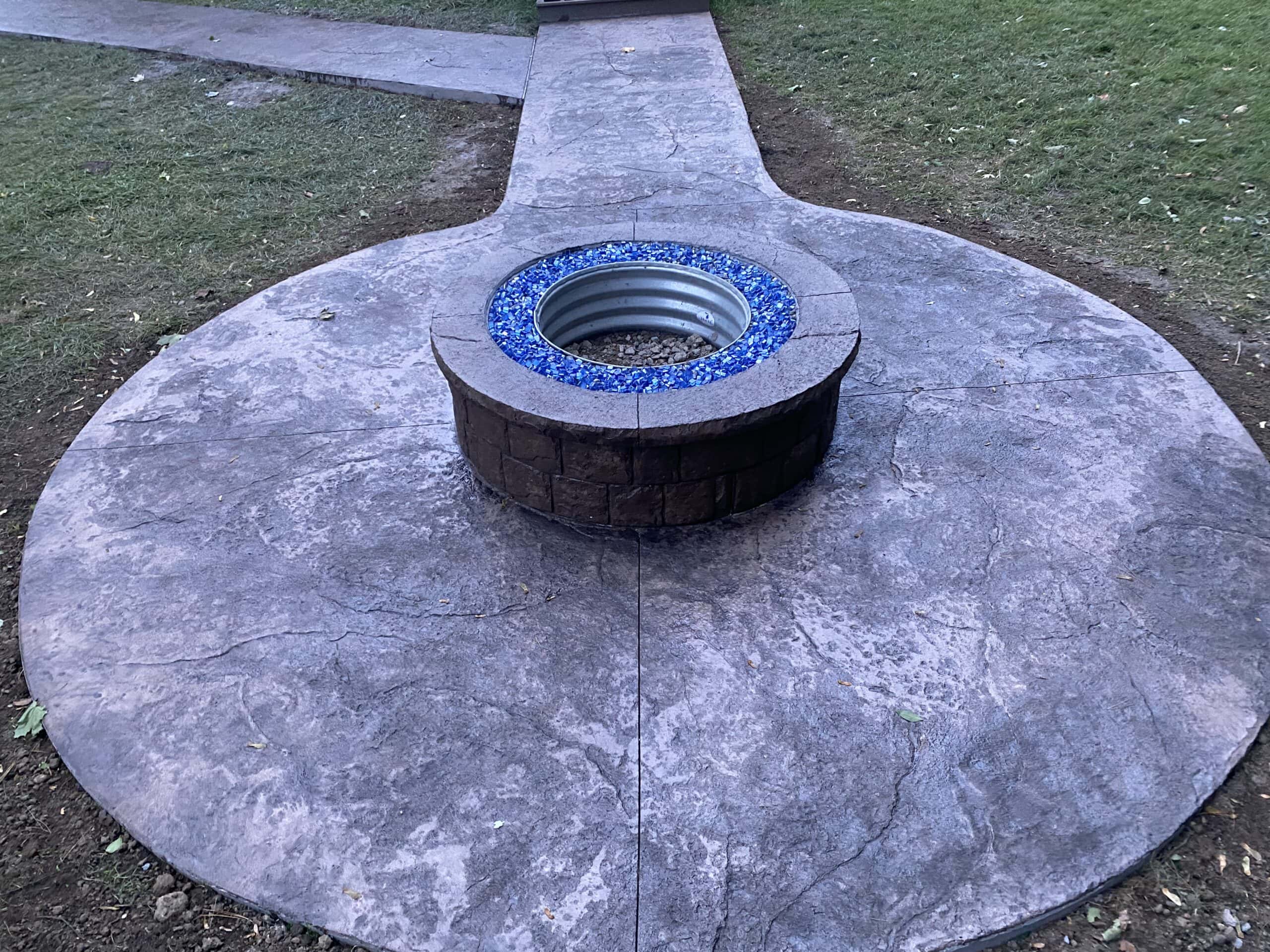
A properly applied sealer reduces how much moisture the slab absorbs, which is the main driver of freeze-thaw spalling. We recommend a sealing schedule and give you guidance on which products to use or avoid poolside, including de-icers that accelerate surface deterioration.
This is part of the same drainage expertise that sets our work apart. A pool deck sloped correctly, sealed on time, and maintained with the right products will look and perform better five winters from now than one that was not.
Local Proof of Work
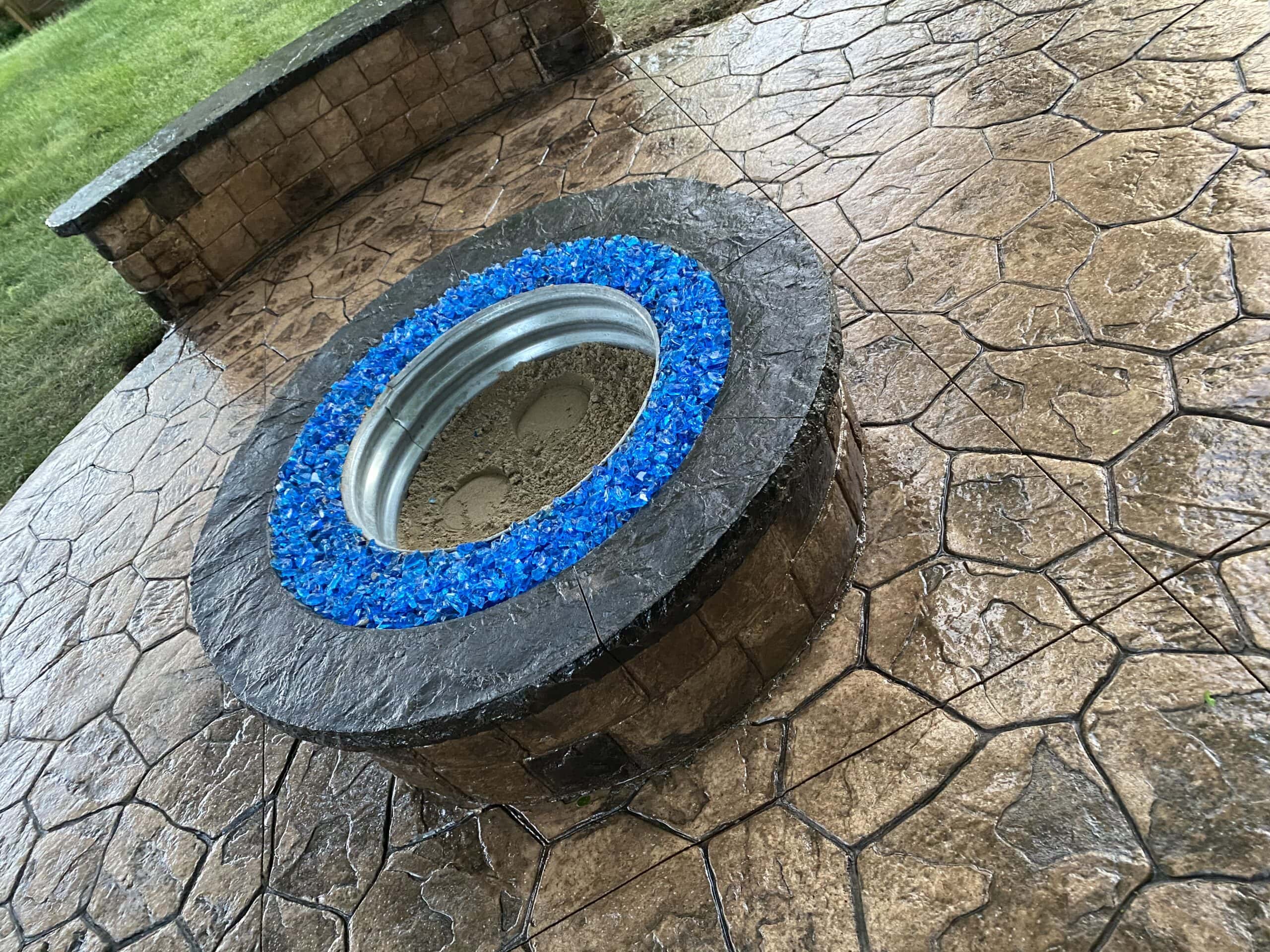
Our pool deck work spans Metro Detroit, Livonia, Canton, Farmington Hills, and surrounding Southeast Michigan communities. We can walk you through our project gallery on-site or online.
What Our Clients Say
“None of the other companies measured slope or water drainage. Guevara did, and I was sold. Permit filed and approved in less than a week. The crew was very professional and clean.” — Township Project Client, Metro Detroit
“The owners themselves were actually on the job site and working, which speaks volumes because they care about their business. If you need any concrete work, this is the company to call.” — Canton, MI Customer
Trust signals: State of Michigan Licensed | Fully Insured | Veteran-Owned | 30+ Years in Business | Owners On-Site
Get a Free Estimate
What Your Estimate Includes and What Affects Cost
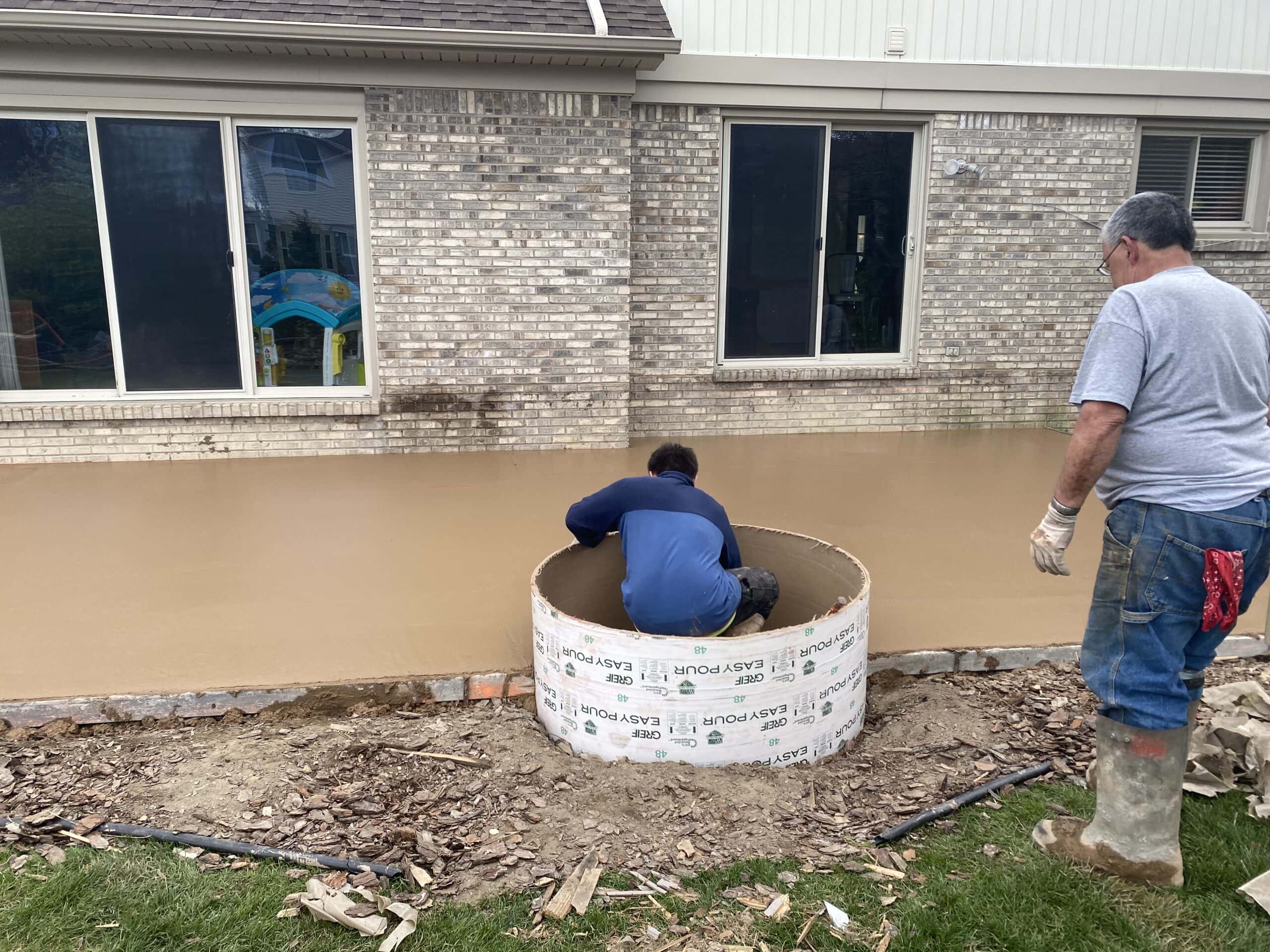
Every estimate from Guevara Construction is done in person, at no charge. We assess the full scope: pool perimeter, base condition, drainage needs, finish preference, and any existing damage to address.
Factors that affect the total cost of a pool deck project include the square footage, whether tear-out and haul-off are needed, the finish type selected, and any drainage or base corrections required. We walk through each item with you, and any scope changes are quoted before work begins.
Financing and Project Minimum
Projects starting at $6,500. 0% financing for 18 months is available through Synchrony Financial. We serve residential and commercial clients across Southeast Michigan with no-obligation estimates on every project.
Ready to move forward? Call 313-629-1100 or request a free estimate online. We are based in Novi and serve the full Metro Detroit area, including Novi, Northville, Livonia, Farmington, Farmington Hills, Plymouth and Bloomfield Hills, and Oakland County. To learn more about our team, visit our About page.
Frequently Asked Questions
How much does it cost to pour a concrete pool deck in Michigan?
Cost depends on square footage, base condition, finish type, and whether old concrete needs to be removed. We provide free on-site estimates so you get accurate pricing for your specific project rather than a general range.
How long does a concrete pool deck last?
A properly installed, sealed, and maintained concrete pool deck can last for many years in Michigan conditions with proper installation and care. The key variables are mix quality, base prep, drainage planning, and keeping up with sealing on a regular schedule.
What finish is best for a pool deck in Michigan?
Broom finish is the most popular because it provides consistent traction, ages cleanly, and handles freeze-thaw cycles well. Exposed aggregate and salt finish are also good options for homeowners who want more texture or visual interest.
How soon can I use the pool deck after it is poured?
Light foot traffic is generally possible within a few days, but the slab should be treated carefully for the first 28 days while the concrete reaches full strength. We give you a clear timeline at the final walkthrough.
Do I need a permit for a pool deck in Michigan?
Permit requirements vary by township. Guevara Construction handles permit filing directly with the township on your behalf, so you do not have to navigate that process yourself.
How do I know if my concrete pool deck needs to be replaced?
Widening cracks, sections that have shifted or sunk, and water that pools instead of draining are the clearest signs your deck has failed and needs full replacement. We assess the base and slab honestly during your estimate and recommend replacement when that is what will actually hold up.
What causes concrete pool decks to crack?
The most common causes are base settlement, poor drainage that traps water under the slab, freeze-thaw pressure, and concrete that was placed or cured incorrectly. Proper base prep, drainage slope, and sealing address all of these at the installation stage.
Do you serve areas outside Metro Detroit?
We serve Southeast Michigan, including Novi, Northville, Livonia, Farmington, Farmington Hills, Plymouth and Bloomfield Hills, plus surrounding Southeast Michigan communities, and surrounding Oakland County communities. Contact us to confirm coverage for your area.