

100+
5-Star Google Reviews

30+
Years Experience

Veteran
Owned

Family
Operated

Owners
On Every Job
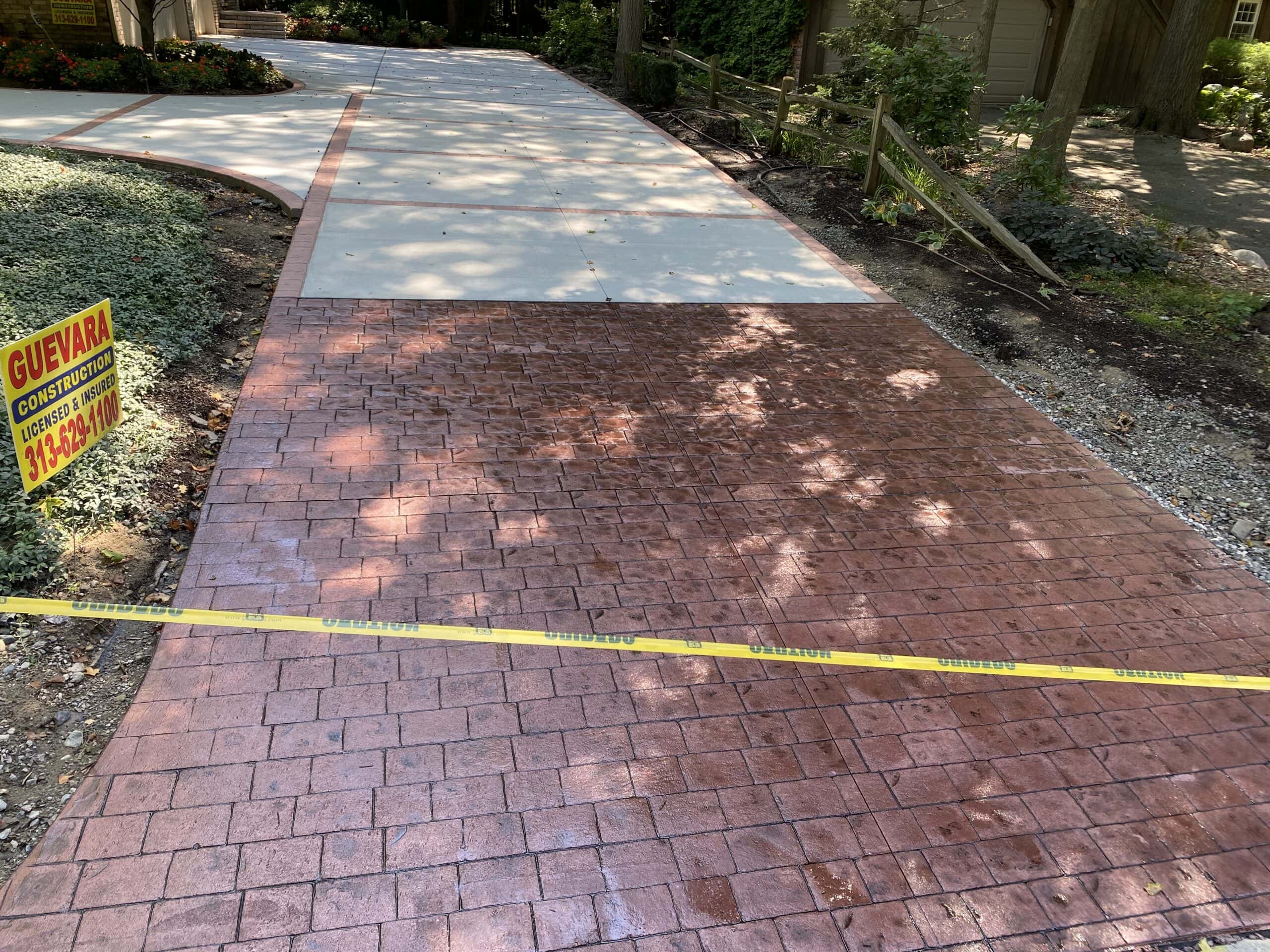
Replacing and Upgrading Your Patio in Farmington
A patio poured in the 1970s on a Farmington colonial was usually four inches of concrete on poorly compacted subsoil, no drainage detailing, and no air-entrained mix. Forty years of freeze-thaw cycles later, the symptoms are familiar:
- Wide cracks running across the slab, often in a star or grid pattern.
- One section settled lower than the rest, with water pooling on top.
- Surface spalling, where small chips and flakes come loose, especially near edges and joints.
- The slab heaving away from the house, opening a gap at the foundation.
Patching covers the visual problem briefly. It does not fix the cause. When the base under a slab has failed, the new patch will move with the old slab and crack in the same places. Full removal and a properly built new patio is the long-term answer.
Patio Finishes for Farmington Homes
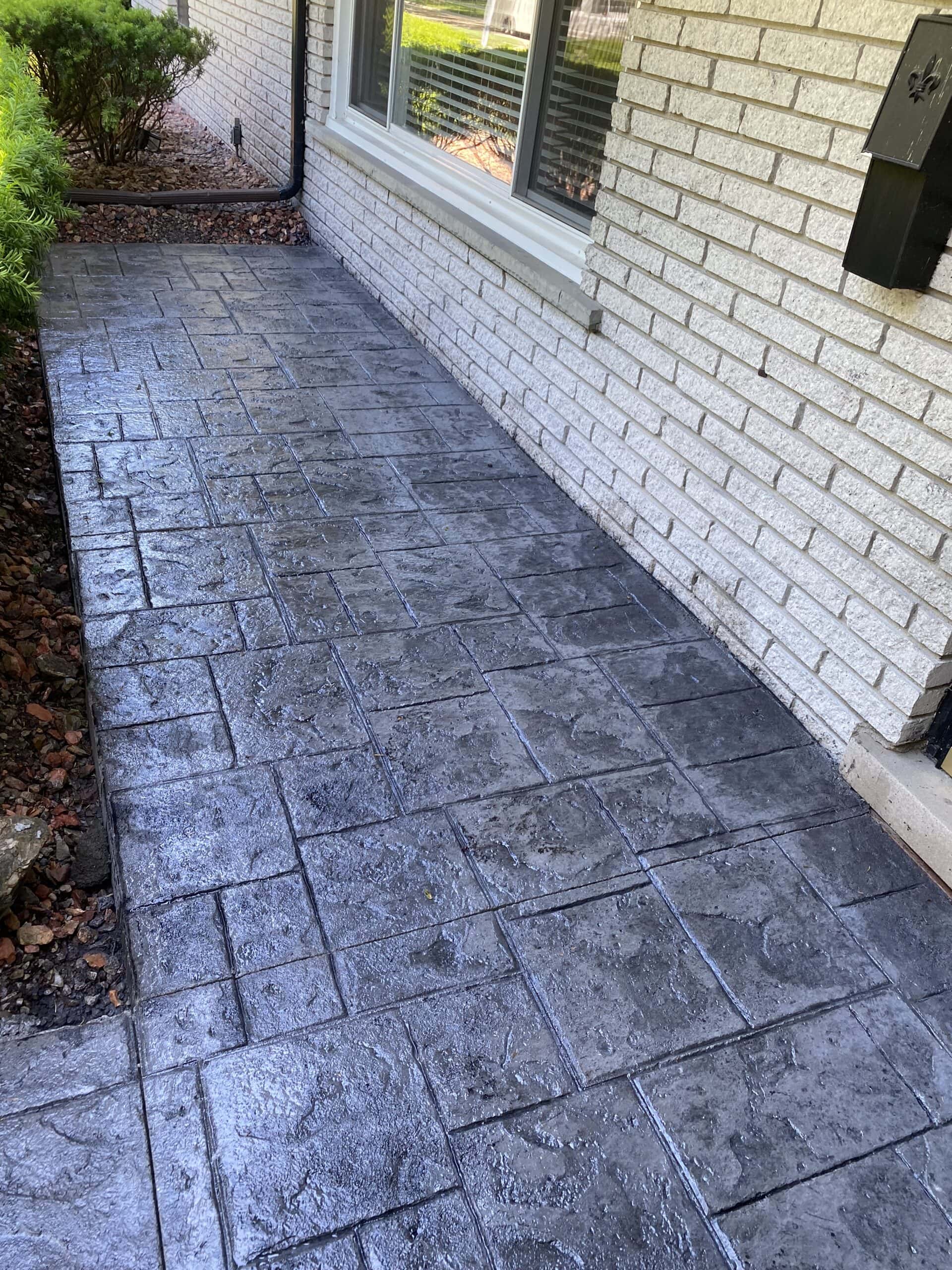
Stamped Concrete
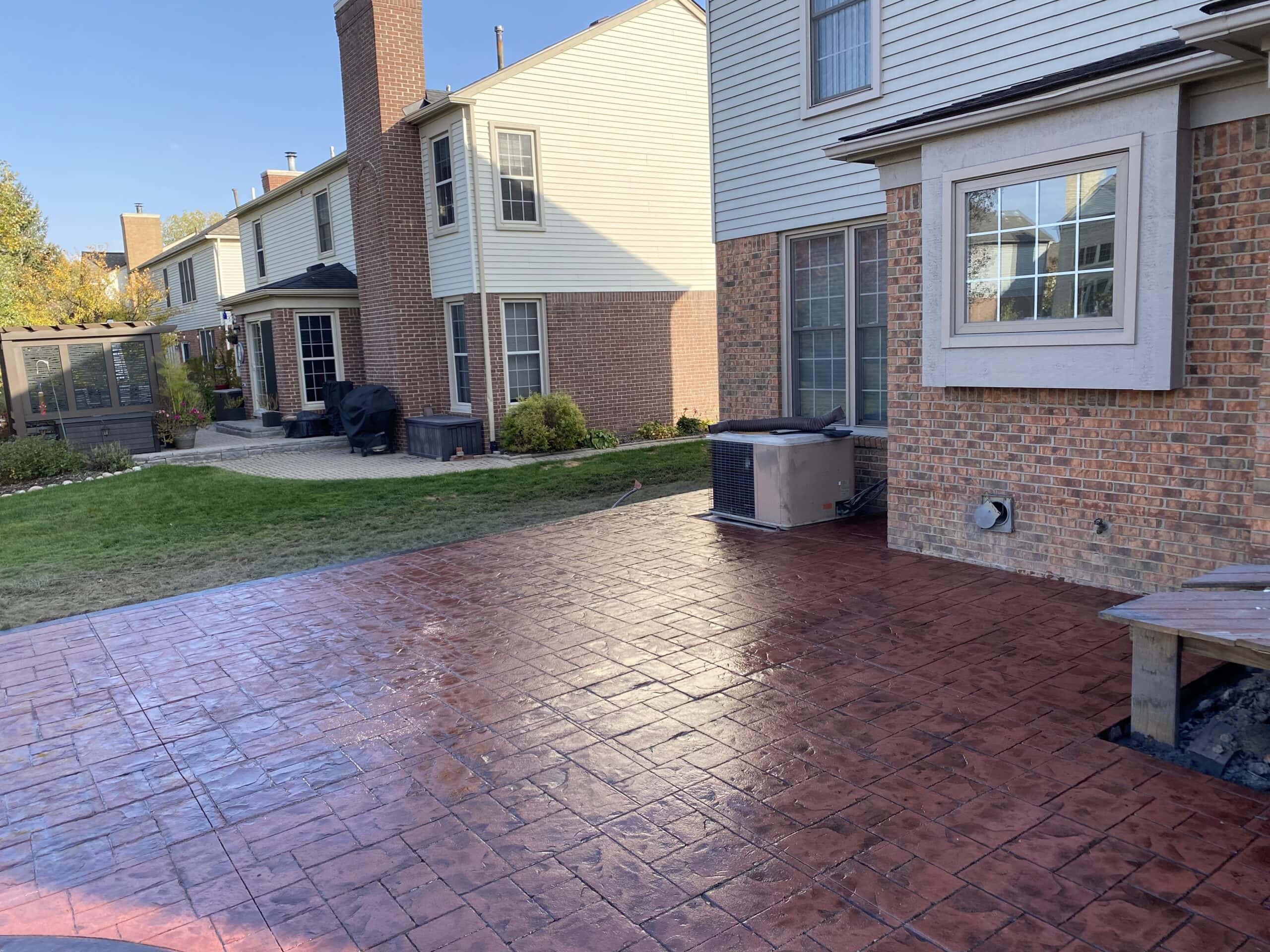
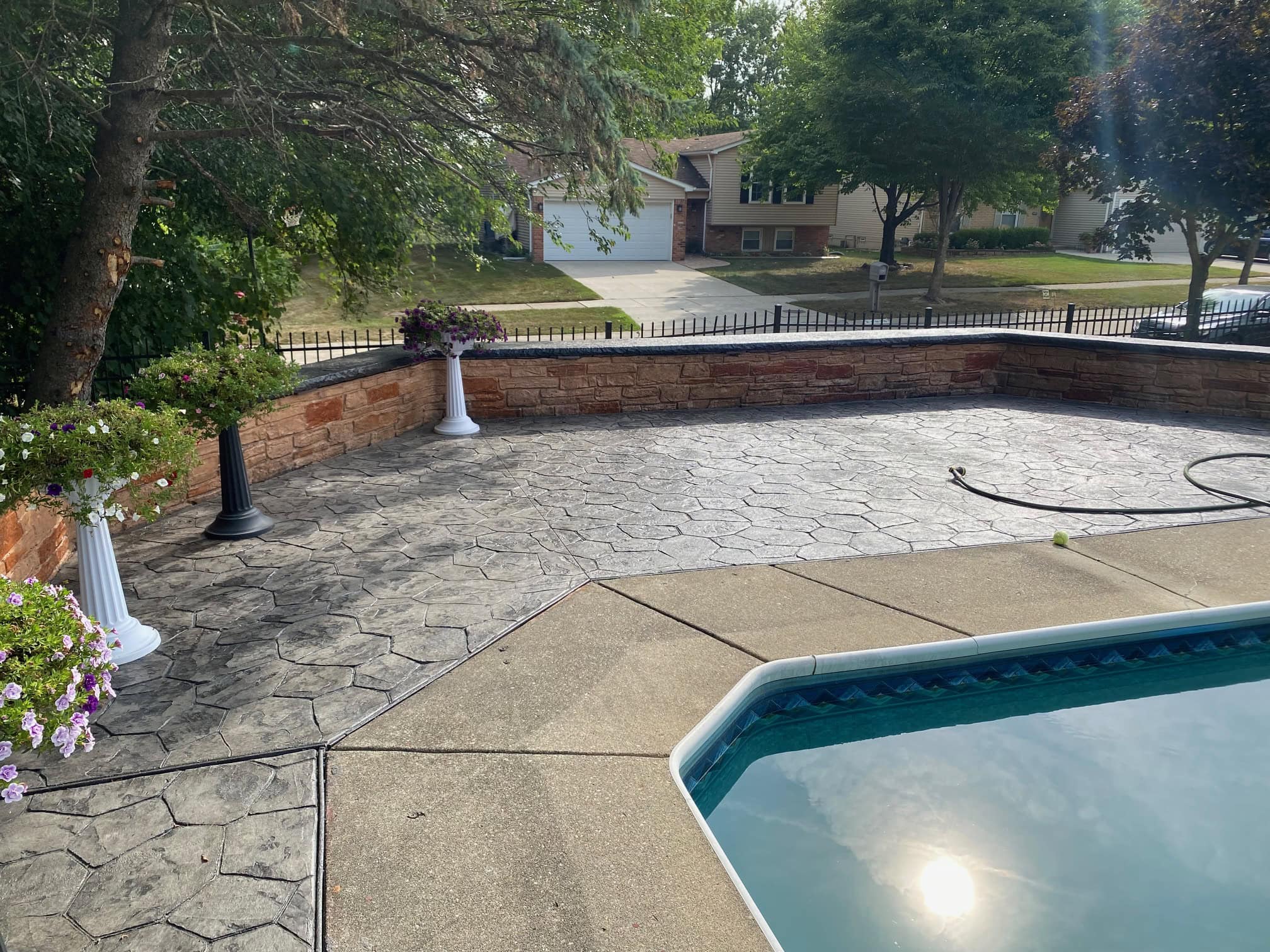
Stamped finishes give a Farmington colonial or mid-century ranch a major visual update without competing with the existing architecture. Patterns we recommend often: random stone, herringbone brick, and slate. Color blends pull from brick, stone, or shutter trim on the home. More on our stamped concrete work.
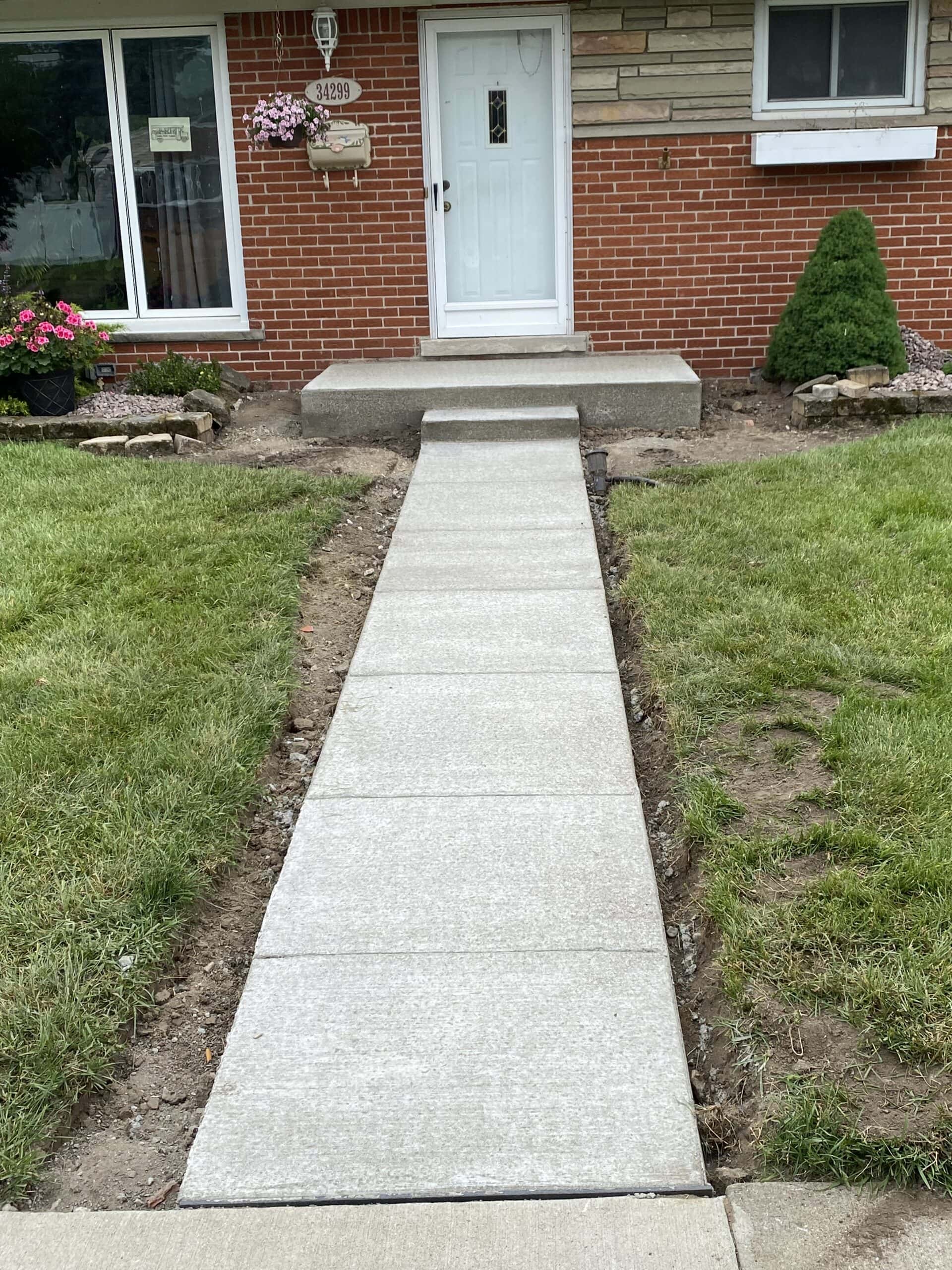
Exposed Aggregate
Exposed aggregate fits Farmington’s mature, settled neighborhoods well. The textured surface reads natural, ages slowly, and pairs nicely with established landscaping. Browse our exposed aggregate concrete options.
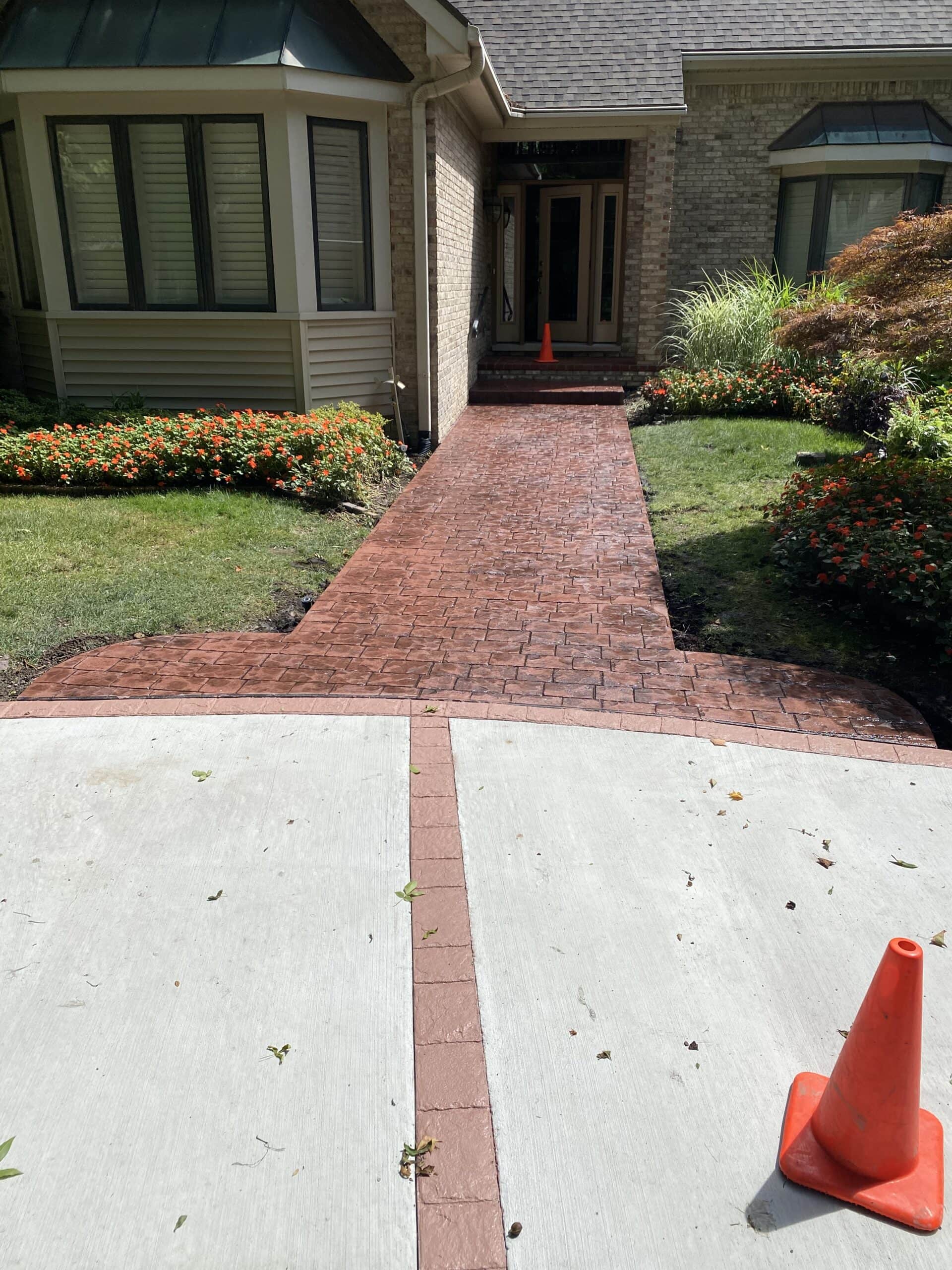
Standard Concrete with Custom Borders
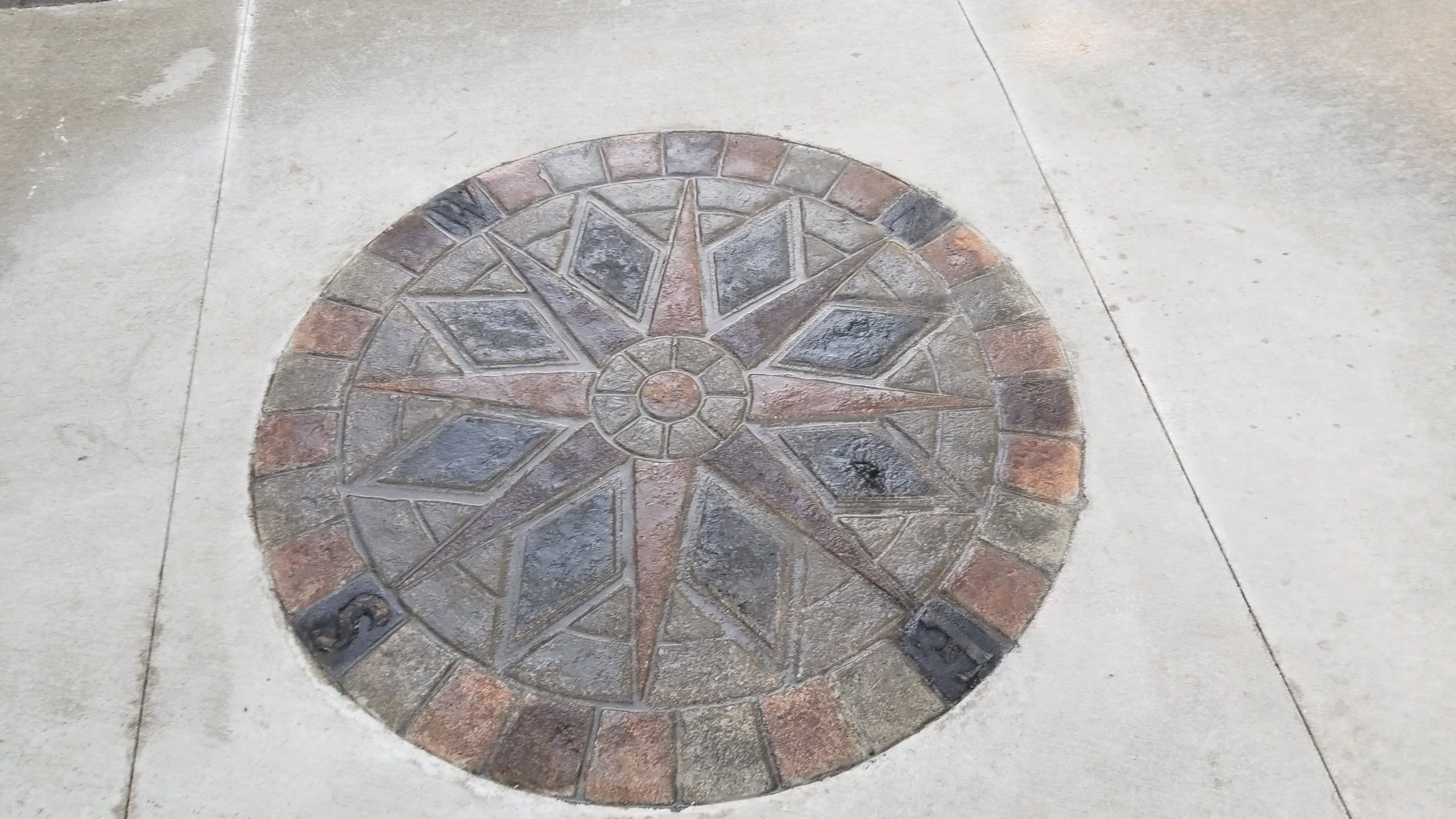
For homeowners replacing a worn slab and wanting the cleanest possible upgrade, a fresh broom finish with a stamped border is a strong value play. It costs less than a fully stamped patio, looks intentional, and gives you a clean canvas.
How We Handle Michigan’s Clay Soil in Farmington
Farmington’s subsoil runs heavy on clay, sometimes nearly pure clay just a few inches down. Clay holds water, expands when wet, shrinks when dry, and lifts concrete when it freezes. Building a patio that survives Michigan winters over clay takes a few specific steps:
- Excavation past the topsoil and into the native subsoil. Depth varies by site.
- A compacted gravel base, typically 4–6 inches, placed in lifts and compacted between each.
- Drainage planning that moves water off the slab and away from the foundation, not into the gravel base.
- Air-entrained concrete mix sized to local freeze-thaw exposure.
- Control joints placed at intervals matched to slab thickness and shape.
These details separate a patio that holds up season after season from one that cracks within a few winters.
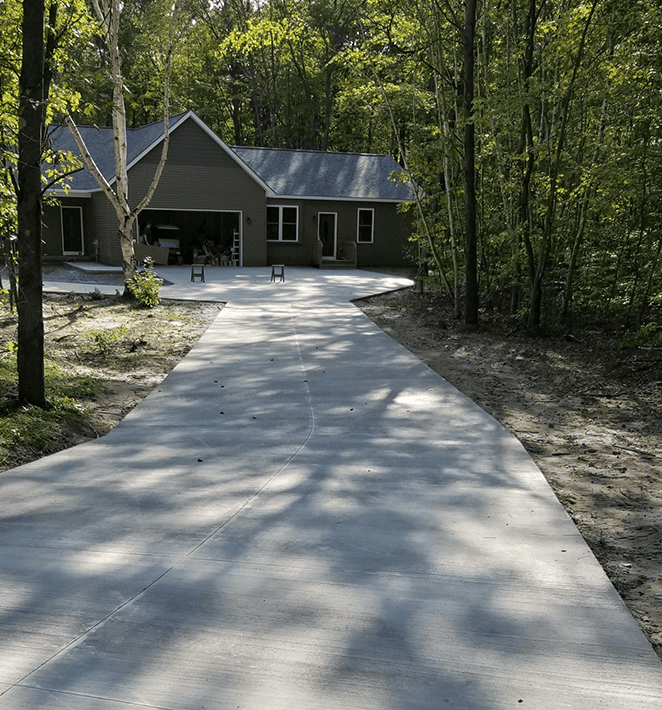
From Old Slab to New Patio: Our Process
Step 1
Free on-site consultation. We assess the existing slab, soil, drainage, and what you want from the new space.
Step 2
Design and finish selection.
Step 3
City of Farmington permit filing, handled by our office.
Step 4
Tear-out and haul-away of the existing patio. Disposal handled.
Custom Patio Farmington: Choosing the Right Replacement Finish for an Older Farmington Home
Replacing an aging patio is also a chance to choose a finish that fits the home better than the original ever did. A few directions that work well on Farmington’s mid-century and colonial housing stock:

Random stone stamped pattern
Reads natural against brick and stone home exteriors common to Farmington.

Herringbone brick stamp
Plays well with the brick detail on colonial-era homes.

Exposed aggregate with a stamped border
Subtle, textured, and ages gracefully.

Broom finish with a colored border
Clean and budget-friendly, with a touch of design intention.
We bring samples to the consultation so you can hold them up against the actual brick, siding, or stone on the home.
Expand Beyond the Patio
Patio replacement is a natural moment to address the rest of the outdoor concrete. Common companions:
- Custom walkways connecting the patio to the front entry walk.
- Custom firepits poured directly into the new slab.
- Concrete steps and stoops off the back door.
- Concrete driveway replacement when the front concrete is showing similar age.
If both the back patio and the front walkway date to the same decade, addressing them together usually saves money on mobilization.
How We Protect the Your Yard During the Project Work
Concrete demolition is messy work. We don’t pretend otherwise. What we do is contain the mess.
- Plywood pathways across grass for wheelbarrow and equipment routes.
- Tarps and barriers around retained landscaping.
- Dust control on dry demolition days.
- Daily cleanup, with debris staged in one area and removed regularly.
- Final site cleanup before the walkthrough, including topsoil grading at the patio edge.
A Farmington homeowner should not need to do yard repair after a patio replacement. If we damage landscaping, we restore it.
What Sets Us Apart From Other Concrete Contractors in Farmington, MI
A patio replacement project runs about two to three weeks of active work, depending on scope, permitting, and weather. That is time with trucks, equipment, and crew at your house. The crew matters.
A few things our customers consistently mention:
- Owner on-site at every pour.
- Phone calls returned within the day, usually within an hour.
- Schedule communicated in advance, including any weather delays.
- Clean job site at the end of each day.
- Written estimate, written contract, written care guide.
We are a small, family-operated business. There is no separate sales team handing your project off to a different crew. The person who walks your property is part of the team pouring your patio.
Get a Free Patio Estimate in Farmington
Replacing an aging patio is a chance to fix what’s wrong underneath and end up with a backyard space that fits how you actually use it. Call 313-629-1100 or send a message through our ‘Contact us’ page. Estimates are free, no-obligation, and in writing.
Projects starting at $6,500.
Frequently Asked Questions
What's the difference between patching and replacing a cracked patio?
Patching addresses visible damage on the surface. Replacement addresses the cause, usually a failed base, drainage problem, or expired concrete. If the slab has structural cracks, settlement, or heaving, patches cover symptoms but do not fix the underlying failure.
How long does tear-out and haul-away take?
For a typical Farmington backyard patio, demolition and removal usually take one to two days, depending on size and access. The whole project, from tear-out to finished patio, often runs two to three weeks of active work.
Can you tell during the estimate whether my patio needs replacing yet?
Often, yes. If we walk the site and see only hairline surface cracking with no settlement or drainage issues, we will tell you plainly that you still have time before a full replacement makes sense. We do not push replacement when it is not needed.
Will the new patio be the same size as the old one?
That is your call. Most Farmington replacements end up larger than the original; 30–50% more square footage is common when the homeowner sees how the new layout could actually be used.
Do you need a City of Farmington permit?
Most replacement projects do. We file with the city directly.
Can you save my landscaping during the tear-out?
We protect mature plantings during demolition and excavation whenever possible. We will flag anything at risk during the consultation so you can transplant or replace ahead of the pour.